
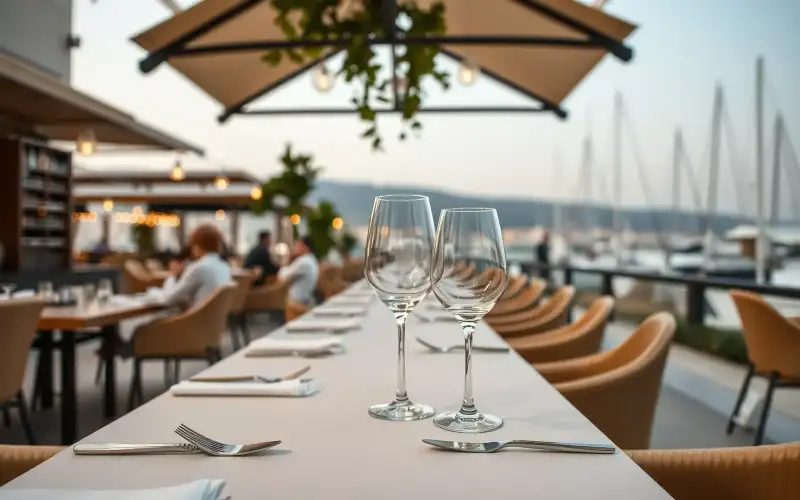
At a fintech conference dinner in Limassol last autumn, someone poured me a glass of something described only as "local red." It turned out to be a 2022 Yiannoudi from a producer I'd never heard of, grown at 900 metres above sea level in the Troodos foothills. It stopped the conversation. That's the thing about the Limassol wine scene in 2026 — the most interesting bottles are no longer the ones with the biggest marketing budgets.
Commandaria, Cyprus's ancient amber dessert wine, rightly dominates the international narrative. It's been produced for at least 3,000 years and carries a Protected Designation of Origin that covers fourteen villages northeast of Limassol. But the region's genuinely exciting development is happening in smaller cellars, often run by winemakers who trained in Burgundy or the Douro and came back with ideas that don't fit neatly into tradition. These boutique operations — typically producing between 5,000 and 40,000 bottles a year — are where the real conversation is.
This guide covers seven producers within a 45-minute drive of Limassol city centre that are worth building a weekend around. I've focused on places that offer structured tastings or tours, have consistent opening hours (a genuine problem in Cyprus, where "by appointment" can mean anything), and where the wine is genuinely good rather than merely local.
How We Chose These Wineries
Selection criteria were deliberately tight. Each winery had to offer a tasting experience that goes beyond a free sip at the counter — meaning a guided tasting of at least four wines, ideally with food pairing or a vineyard walk. Price transparency mattered: if you can't find out what a visit costs before you arrive, that's a red flag for a business traveller with a packed schedule. User ratings on Google and TripAdvisor were checked as a sanity filter, though I'd note that Cypriot hospitality inflates scores across the board, so anything below 4.3 stars here is genuinely worth questioning.
I excluded the large commercial producers — KEO, ETKO, LOEL and Sodap — not because their wines are poor, but because they're well documented elsewhere and the visitor experience is closer to a factory tour than a boutique tasting. The focus here is on family-run or founder-led operations where the person pouring your wine can usually tell you which row of vines it came from.
The Curated List: Seven Boutique Wineries Near Limassol
1. Vlassides Winery — Kilani Village, 38km from Limassol
Sophocles Vlassides studied oenology in Adelaide and came back to Kilani with a clear ambition: make Shiraz work at altitude. His single-vineyard Shiraz, grown at around 800 metres, consistently surprises visitors expecting something jammy and overblown. It's structured, peppery, and ages well. The winery itself is a converted stone building on the edge of the village, and the tasting room has the kind of unfussy confidence that comes from knowing your product is good.
Tastings run Tuesday to Sunday, 10:00–17:00. A standard tasting of five wines costs €15 per person; a premium tasting with charcuterie and cheese from local producers is €30. The Shiraz and the Grifos Red (a Cabernet Sauvignon blend) are the standouts. Google rating: 4.7 stars. Booking recommended at weekends.
2. Zambartas Winery — Agios Amvrosios, 42km from Limassol
Marcos Zambartas is one of the more quietly influential figures in Cypriot wine. His father Akis founded the estate; Marcos, who trained in Bordeaux, has pushed the indigenous varieties — particularly Maratheftiko and Promara — into genuinely interesting territory. The 2021 Maratheftiko is probably the best expression of that grape I've tasted outside a restaurant context: dark fruit, firm tannins, a mineral finish that lingers.
Tours run by appointment Monday to Saturday. A vineyard walk plus tasting of six wines costs €25. The winery is small — annual production is around 35,000 bottles — and the atmosphere is correspondingly personal. If Marcos is there, ask him about the challenges of getting Maratheftiko to ripen consistently. You'll get a twenty-minute answer that's worth every second. Rating: 4.6 stars.
3. Vouni Panayia Winery — Vouni Village, 50km from Limassol
This is the furthest entry on the list and the most scenically dramatic. Vouni sits at 1,100 metres in the western Troodos, and the drive up — through pine forest and hairpin bends — is half the experience. The winery focuses almost exclusively on indigenous varieties: Xynisteri for whites, Maratheftiko for reds, with a Rosé that has developed a following among the Limassol restaurant trade.
Open daily 09:00–17:00 in summer (April to October); weekdays only in winter. Standard tasting: €10 for four wines. Extended tasting with food: €22. The Alina White (100% Xynisteri) is the wine to seek out — crisp, floral, with a salinity that makes sense when you remember how close Cyprus is to the sea even at this altitude. Rating: 4.5 stars.
4. Linos Winery — Lania Village, 28km from Limassol
Lania is the closest of these villages to Limassol and arguably the prettiest, which means it gets coach parties on summer weekends. Linos, however, manages to feel removed from the tourist circuit. The winery is family-run — third generation — and the tasting room is essentially the family's living room, which either charms you or makes you uncomfortable depending on your temperament. I find it charming.
The wines are more traditional than some on this list: a solid Cabernet-Merlot blend, a decent Xynisteri, and a Commandaria that's made under the PDO rules and is noticeably better than the commercial versions. Tastings: €12 for five wines, no booking required. Open Thursday to Sunday, 11:00–18:00. Rating: 4.4 stars.
5. Tsiakkas Winery — Pelendri Village, 45km from Limassol
Cornelios Tsiakkas was among the first Cypriot winemakers to take Xynisteri seriously as a variety capable of producing age-worthy wine rather than just fresh, simple whites. His barrel-fermented Xynisteri is the proof of concept: toasty, textured, genuinely complex. The winery also produces one of the island's better rosés from Maratheftiko.
Open Monday to Saturday, 09:00–17:00. Tasting of five wines: €15. Add a vineyard walk for €10 more. The setting — a working farm with chickens wandering past the tasting terrace — is either rustic or chaotic depending on the day. Worth it regardless. Rating: 4.5 stars.
6. Constantinou Winery — Polemidia, 8km from Limassol
The only entry on this list that's effectively within the city's orbit. Polemidia is a suburb of Limassol, and Constantinou operates more as an urban winery than a rural estate — grapes are sourced from mountain vineyards but the production and tasting facilities are here, which makes it genuinely convenient for conference visitors who can't justify a half-day in the hills.
The range is broad: everything from sparkling wine (made by the traditional method, which is unusual for Cyprus) to a serious Cabernet Sauvignon reserve. Tastings run daily, 10:00–19:00, no booking required. Cost: €10 for four wines. The sparkling Xynisteri is the conversation piece — not profound, but well-made and a useful reminder that Cyprus wine isn't stuck in one register. Rating: 4.3 stars.
7. Ezousa Winery — Pano Panagia, 55km from Limassol
The longest drive on the list, and the one I'd recommend saving for a full day out rather than a quick detour. Pano Panagia is in the Paphos wine region technically, but it's within the orbit of Limassol visitors and the quality justifies the extra distance. Ezousa is a small operation — under 15,000 bottles annually — run by a former agronomist who came to winemaking late and brought a scientist's rigour to the process.
The whites are the strength here: a Xynisteri-Chardonnay blend that shouldn't work as well as it does, and a skin-contact Xynisteri (orange wine, essentially) that's been getting attention from the natural wine crowd. Tastings by appointment only, Wednesday to Sunday. Cost: €20 for five wines. Rating: 4.6 stars.
Honourable Mentions
Two producers that almost made the main list but have more limited visitor access:
- Fikardos Winery (Mesogi, 5km from Limassol) — Good Cabernet Sauvignon and a well-priced Xynisteri. Tasting room is functional rather than atmospheric, but the wines punch above their price point. Open weekdays only; €8 for three wines.
- Kamanterena Winery (Omodos Village, 35km) — Omodos is one of the most visited villages in Cyprus, which cuts both ways. The winery benefits from foot traffic but can feel rushed. The Commandaria here is genuinely excellent. Tastings: €10, walk-in welcome.
Practical Comparison: At a Glance
| Winery | Distance from Limassol | Tasting Price | Opening Days | Rating |
|---|---|---|---|---|
| Vlassides | 38km | €15–€30 | Tue–Sun | 4.7 |
| Zambartas | 42km | €25 | Mon–Sat (appt) | 4.6 |
| Vouni Panayia | 50km | €10–€22 | Daily (summer) | 4.5 |
| Linos | 28km | €12 | Thu–Sun | 4.4 |
| Tsiakkas | 45km | €15–€25 | Mon–Sat | 4.5 |
| Constantinou | 8km | €10 | Daily | 4.3 |
| Ezousa | 55km | €20 | Wed–Sun (appt) | 4.6 |
Planning Your Visit: Practical Notes
A hired car is non-negotiable for anything beyond Constantinou. The mountain roads are well-maintained but narrow, and the bus network — while improving — doesn't serve most of these villages with any useful frequency. From Limassol city centre, you can reach Linos in 35 minutes on a clear day; Vouni Panayia and Ezousa require 60–75 minutes and a degree of comfort with mountain driving.
The optimal season for visiting is September through November, when harvest activity adds a layer of atmosphere and the temperatures are manageable. Summer (July–August) is hot at lower altitudes, though the mountain villages sit in a different climate entirely. Several wineries reduce their visitor hours in winter — always confirm by phone or email before making the trip.
"The mistake most visitors make is treating a winery visit as a shopping trip. Come with questions. These producers have thought hard about what they're doing and why. The conversation is part of the experience." — Marcos Zambartas, Zambartas Winery
For business travellers based in Limassol for a conference, the calculus is straightforward: Constantinou for a weekday evening visit that doesn't require a car; Vlassides or Linos for a half-day Saturday excursion; Zambartas or Vouni Panayia if you can justify a full Sunday. Most of these producers will arrange a case shipment to the UK — ask at the tasting room and budget for around €25–€40 per case for freight, depending on volume.
Cyprus wine has been underestimated for decades, partly because the large commercial producers dominated export markets with undistinguished bulk wine. What's happening in these smaller cellars is a different story entirely — and 2026 is a good time to be paying attention.
Comments (3 comments)