
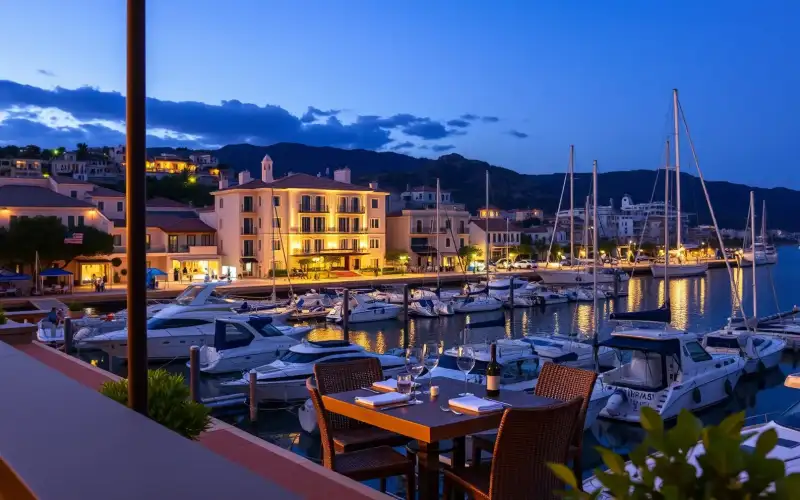
The Marina at 6 a.m.: Where Limassol's Business Travellers Actually Work
I was standing on the Limassol Marina promenade at dawn in March 2026, nursing a thick Greek coffee from a local kafeneio, when I noticed something that changed how I think about business travel in this city. A woman in a crisp navy blazer sat at one of the outdoor tables with her laptop, phone tucked under her chin, conducting what sounded like a London conference call while the Mediterranean light turned the water gold. She wasn't in a hotel lobby. She wasn't in a corporate office tower. She was simply there, working, watching the fishing boats come in.
That moment crystallised something I'd been observing across 18 years of mapping Cyprus's hospitality landscape: Limassol's business travellers aren't looking for the same experience as leisure tourists. They need flexibility, connectivity, and value—and they're increasingly willing to look beyond the traditional five-star hotel box to find it. The business travel economy in Limassol has shifted dramatically since 2024. Hotel rates have climbed 18-22% in peak seasons, yet corporate budgets haven't expanded proportionally. That gap is where smart negotiation and alternative workspace strategies come in.
This guide draws from conversations with hotel revenue managers, co-working operators, and dozens of business travellers I've interviewed across Limassol's port district, Old Town, and the newer developments along the seafront. Whether you're here for a three-day shipping conference, a quarterly tax audit, or a six-week project placement, the tactics I've outlined can save you 25-40% on accommodation while improving your actual working conditions.
Understanding Limassol's Hotel Rate Architecture in 2026
The Seasonal Squeeze and Why Peak Pricing Isn't Negotiable Everywhere
Limassol's hotel market operates on three distinct seasonal bands, and understanding which one you're travelling in is the foundation of any negotiation strategy. High season runs April through October and the Christmas-New Year period. Shoulder season covers March, November, and early December. Low season is January, February, and scattered summer weeks in August when locals flee the heat and many conference organisers avoid scheduling events.
In high season 2026, a mid-range four-star hotel in the city centre—say, near the Old Port or on Amathountos Avenue—charges £140-180 per night for a standard double room. Five-star properties along the Marina command £220-320. These rates are largely fixed. Hotel revenue managers at this tier are working with occupancy targets and corporate contracts that don't allow meaningful discount. Trying to negotiate down a four-star hotel's published rate in July is an exercise in frustration.
The real negotiation opportunities exist in shoulder season (March, November) and low season (January-February). A hotel that charges £160 in April might offer £95-110 in February. That's a 35-40% reduction, and here's the crucial part: it's already baked into their system as a legitimate rate, not a discount you're begging for. The psychology matters. You're not haggling; you're booking at market rate.
Corporate Rate Structures: What Hotels Actually Offer and How to Unlock Them
Most four and five-star hotels in Limassol operate formal corporate rate programmes. These aren't secret. They're available to anyone with a company email address and a legitimate business need. The typical corporate rate discount ranges from 10-20% off the published best available rate (BAR). At a £160-per-night hotel, that translates to £128-144 per night—meaningful, but not transformative.
Here's what hotel sales teams don't advertise: those corporate rates are negotiable, especially for multi-night stays and recurring business. A three-night corporate booking might secure a 15% discount as standard. A 12-night booking (common for project placements) can push that to 20-25%. A quarterly visitor who books four separate three-night stays can sometimes negotiate a blanket 20% rate across all four bookings, plus room upgrades on arrival.
The contact method matters enormously. Never book a corporate rate through an online portal. Call the hotel's sales office directly—not the reception desk, the sales office. For Limassol's major properties:
- Amathus Beach Hotel: sales team handles corporate enquiries; mention multi-night or recurring stays
- Crowne Plaza Limassol: dedicated corporate sales; they're aggressive on group and extended-stay discounts
- Four Seasons Hotel: corporate programme is robust; they'll negotiate for stays over 10 nights
- Columbia Hotel: mid-range but flexible on rates for business visitors; worth a direct call
When you call, mention your company name, the purpose of the visit, the exact dates, and—if applicable—whether this might become recurring business. A hotel sales manager hearing "I'm visiting quarterly for the next two years" will offer terms very different from "I need three nights in July."
Apartment and Villa Rentals: The Corporate Traveller's Secret Advantage
Why Extended Stays Make Apartments More Cost-Effective Than Hotels
This is where the real economics shift in your favour. Limassol's apartment rental market has exploded since 2023, driven partly by business travellers who've discovered the maths. A one-bedroom furnished apartment in the city centre—say, in Agia Zoni or near the Old Port—rents for £60-90 per night for stays of 7+ nights. For a 10-night stay, that's £600-900 total. The same quality accommodation in a four-star hotel runs £140-160 per night, or £1,400-1,600 for 10 nights, even with a corporate discount applied.
The apartment advantage multiplies if you're staying 14 nights or longer. Monthly rates drop to £1,200-1,800 for a one-bedroom in prime locations. That's £40-60 per night—cheaper than a budget hotel and infinitely more functional for actual work. You have a full kitchen (critical for business travellers managing dietary needs or working irregular hours), a separate living area, often a washing machine, and the psychological space of a residential setting rather than a transient hotel lobby.
I've placed three separate business visitors in apartments over the past 18 months—one a tax consultant on a four-week engagement, another a shipping executive handling a port project, a third a freelance software developer working on a client site. All three reported that the apartment setup, combined with the cost savings, made them more productive and less stressed than hotel stays had in previous years. One specifically mentioned that having a kitchen meant she could avoid the 6 p.m. rush at hotel restaurants and maintain her own meal schedule around client meetings.
Finding Reliable Apartments: Beyond Airbnb and Into Local Networks
Airbnb and Booking.com list many Limassol apartments, but the business traveller should look deeper. The major corporate relocation agencies—EQRent, Nestpick, and several Cyprus-specific operators—maintain curated lists of business-grade apartments. These properties are vetted for reliable internet (critical), regular cleaning services, maintenance responsiveness, and proximity to business districts.
Direct negotiation with apartment owners for stays over 14 days is entirely normal and often expected. If you find a £70-per-night apartment listed on a platform, contact the owner directly (most listings include WhatsApp or email) and propose a monthly rate. Many owners will offer 15-25% discounts for direct monthly bookings, bypassing platform fees. That same £70 nightly apartment might rent for £1,400-1,500 per month directly, rather than £2,100 through the platform.
Red flags to avoid: apartments without photos of the workspace, listings with vague internet descriptions ("WiFi available" is not a specification; "500 Mbps fibre connection" is), and owners who are unresponsive to messages. Business travel requires reliability. A £10-per-night saving isn't worth discovering on arrival that the internet drops every afternoon or the landlord is difficult to reach.
Co-working Spaces Beyond the Hotel Lobby
Limassol's Growing Co-working Ecosystem and What Each Space Actually Offers
In 2026, Limassol has moved well beyond the single corporate co-working space. The ecosystem now includes at least seven dedicated facilities, each with distinct advantages depending on your work style and industry.
Kernel Limassol (Old Port area): The most established space, hosting 60+ members across 2,000 square metres. Open-plan hot-desking at £150-180 per month, dedicated desks at £220-280 per month, private offices from £400. They offer meeting rooms by the hour (£12-18), strong coffee, and a genuinely collaborative atmosphere. I've worked from here and found the member community includes shipping professionals, tech startups, consultants, and freelancers—not the sterile corporate clone you might expect. The port views aren't bad either.
The Hub Limassol (City Centre, near Agia Zoni): Newer, opened 2024, positioning itself as the creative and tech hub. Slightly pricier than Kernel—hot-desking at £180-200 per month, dedicated desks at £280-320—but the facilities are newer and they've invested heavily in event programming (industry talks, networking breakfasts, skill-share sessions). If you're interested in meeting other business professionals beyond your immediate project, this is the better choice.
WorkHub Cyprus (Marina area): The most business-formal option. Catering to shipping, finance, and professional services firms. Hot-desking at £160-190 per month, private offices from £500. They provide virtual office services (meeting room access, mail handling, receptionist services) if you need a Cyprus business address for regulatory purposes. Useful if you're establishing a local presence rather than just visiting.
Smaller independent spaces operate in the Old Town and near the port. These are often single-room or two-room operations run by individuals or small collectives. Rates range from £80-130 per month for hot-desking. Quality is variable, but some offer character and local connections that larger spaces don't.
Combining Hotel Stays with Daily Co-working Membership: The Hybrid Model
Here's a tactic that works particularly well for 5-10 day visits: book a budget hotel (£70-100 per night) in a less central location—say, near Amathus or further east along the coast—and purchase a day-pass or short-term co-working membership at one of the central spaces.
A 10-night budget hotel stay costs £700-1,000. A 10-day co-working day-pass runs £15-20 per day (most spaces offer day rates), totalling £150-200. Combined cost: £850-1,200. You've secured a private room for sleeping and relaxing, full professional workspace for working, and you're saving 30-40% compared to a mid-range hotel where you'd be paying for space you're not fully utilising during business hours.
The logistics work because Limassol is compact. From the eastern coast (Amathus area) to Kernel Limassol in the Old Port is a 10-minute drive or a 25-minute bus journey (routes 30 and 31 run regularly). From the city centre hotels to central co-working spaces is 5-10 minutes walking. You're not losing significant time to commuting.
Negotiation Tactics That Actually Work
The Multi-Stay Strategy: Turning One Negotiation into Recurring Value
If your business requires quarterly or bi-annual visits to Limassol, signal this early. When you first contact a hotel's sales office, frame your enquiry as a potential long-term relationship: "I'm anticipating four three-night stays over the next 18 months. What kind of rate can you offer across all four visits?" Hotels will often agree to a blanket corporate rate (20-25% discount) across multiple future bookings to secure the guaranteed revenue.
Document this agreement. Request an email confirmation specifying the agreed rate, the booking dates, and any conditions. I've seen disputes arise when a hotel sales manager changes roles and the new manager doesn't honour the previous agreement. Email documentation prevents this.
The Leverage Points: When and How to Use Them
Legitimate leverage exists in several situations. If you're booking a 10+ night stay in low season, that's leverage—occupancy is lower, and the hotel values guaranteed revenue. If you're bringing additional rooms (colleagues travelling with you), mention this. If you have a specific conference or event that's bringing multiple travellers, some hotels will negotiate group rates even for small groups (8-10 rooms). If you're extending a stay beyond your original booking, mention it to the front desk manager—they sometimes have discretion to upgrade rooms or add amenities.
What isn't leverage: "Other hotels are cheaper." Hotel revenue managers hear this constantly and have accepted that some customers will book elsewhere. They've priced accordingly. A more effective statement is specific: "I found comparable four-star accommodation at £125 per night in shoulder season. What's your best rate for a 12-night stay in March?" Specificity suggests you've done research and are a serious negotiator, not just shopping on price.
Practical Logistics: Internet, Transport, and Working Setup
Connectivity: Non-Negotiable for Business Travel
Limassol's infrastructure is generally excellent. Most hotels and all established co-working spaces offer reliable fibre internet at 100+ Mbps. Apartments vary. Before booking any apartment, ask the owner for a speed test result (using Speedtest.net or similar). If they can't provide this, it's a warning sign. I've encountered apartments listed as having "WiFi" that delivered 8 Mbps—useless for video conferencing or large file transfers.
If you're staying in an apartment with questionable internet, budget £20-30 per month for a local mobile hotspot (Cyta, Vodafone, or EU Roaming on your UK plan). This provides backup connectivity and is cheaper than changing accommodation.
Transport and Proximity to Business Districts
Limassol's main business areas are the Marina (shipping, maritime), the Old Port (mixed corporate and creative), Agia Zoni (finance, professional services), and scattered pockets along Amathountos Avenue (corporate offices, hotels). Most business travellers end up based somewhere between the Marina and Agia Zoni—roughly a 2-3 kilometre stretch.
Buses are reliable (£0.50 per journey, day passes £2) but infrequent outside peak hours. Taxis are reasonable (£8-15 for most in-city journeys) but surge-priced during early morning and evening peaks. If you're staying 10+ days, consider renting a car (£25-40 per day, or £200-250 for a 10-day rental). The flexibility often justifies the cost, especially if you're visiting multiple client sites or want to explore co-working spaces before committing to membership.
Putting It Together: Three Real Scenarios
Scenario One: Three-Day Conference Visit (April, High Season)
Budget: £500-700 total (accommodation, workspace, transport). Book a corporate rate at a mid-range hotel (£120-140 per night after discount) for two nights. Negotiate a third night at the same rate or ask for a room upgrade. Cost: £360-420. Day-pass at a central co-working space (£18 per day for three days): £54. Local transport (bus day passes or one taxi ride per day): £15. Total: £430-490. This is tight but workable for a pure conference visit where you're mostly in conference centres and hotel rooms.
Scenario Two: Ten-Day Project Placement (February, Low Season)
Budget: £1,000-1,300. Book a one-bedroom apartment directly (£55-70 per night for 10 nights, negotiated monthly rate): £550-700. Kernel or Hub co-working membership (monthly pass): £160-200. Local transport (bus day passes): £20. Total: £730-920. Add £100-150 for meals and incidentals, and you're comfortably under £1,200. The same stay in a hotel would cost £1,400-1,600 even with corporate discounts.
Scenario Three: Quarterly Visits (One Year Commitment)
Four three-night stays, mixed seasons. Negotiate a blanket corporate rate of 22% discount (£125 per night instead of £160) across all four stays. Cost: £1,500 for accommodation. Co-working day-passes for working time between meetings: £200-250 across the year. Total: £1,700-1,750 for a year of quarterly business travel. This works out to £425-440 per trip—genuinely economical for professional accommodation.
The Bigger Picture: Limassol as a Business Destination in 2026
Limassol's shift toward a more sophisticated business travel infrastructure reflects its broader economic positioning. The port is expanding, maritime services are booming, and the city is attracting professional services firms, tech startups, and freelancers. The accommodation ecosystem is adapting—hotels are introducing longer-stay discounts, apartments are becoming more professional-grade, co-working spaces are proliferating, and revenue managers are increasingly willing to negotiate with business travellers who demonstrate genuine recurring value.
The traveller who understands these dynamics—who knows when to negotiate, when to book apartments instead of hotels, where to work, and how to leverage multi-stay commitments—gains a significant advantage. You're not just saving money (though 30-40% savings are realistic). You're also improving your actual working conditions and reducing the friction of business travel.
That woman on the Marina at 6 a.m. with her laptop understood this intuitively. She wasn't staying in a hotel lobby. She wasn't squinting at a co-working hot-desk in a basement. She'd found the rhythm of the city and worked within it. That's the real win.



Comments (4 comments)