
The Marina That Costs Nothing to Admire
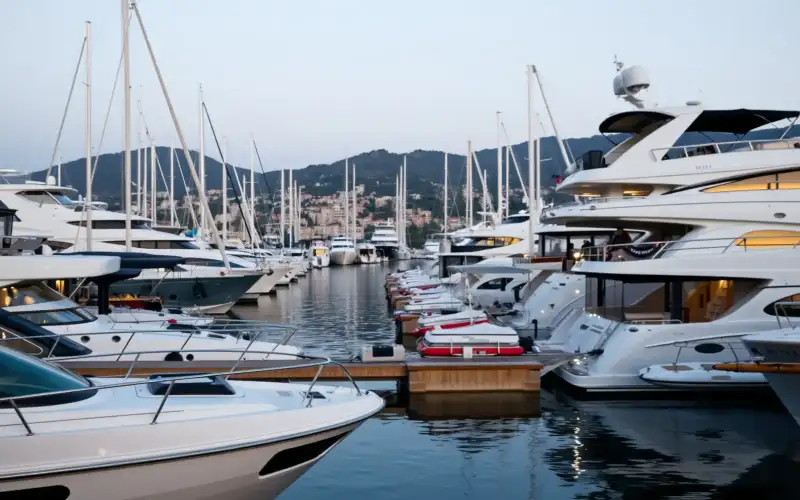
Every Friday morning in summer, around 9 a.m., a particular phenomenon unfolds at Limassol Marina. The light hits the water at precisely the angle that makes the moored superyachts look less like vessels and more like floating palaces. A woman in a linen dress walks past a 45-metre Sunseeker, pauses to photograph it, then continues without spending a single euro. This is the hidden luxury of Limassol in 2026 – the ability to experience genuine glamour without the bill.
The marina stretches along 650 metres of prime waterfront, hosting some 500 berths filled with vessels ranging from modest motor cruisers to nine-figure superyachts. Names like Heesen, Benetti, and Austal represent the pinnacle of yacht construction. Walking these promenades costs absolutely nothing. No admission, no membership, no hidden charges. Yet the sensory experience rivals any paid attraction on the island.
British travellers, particularly those aged 35-65 who've grown accustomed to the premium pricing of Mediterranean marinas elsewhere, often arrive expecting fees. They're pleasantly surprised. Wine enthusiasts heading to the Troodos hills, business travellers between meetings, expat researchers assessing Cyprus living – they all pass through, many discovering this free luxury by accident.
Understanding Limassol Marina: The Numbers Behind the Glamour
Limassol Marina opened in 2014, transforming a stretch of industrial coastline into Europe's only five-star marina resort. It's not a traditional working port like Larnaca or Paphos. Instead, it's a carefully curated destination where every element – from the limestone paving to the sculptural lighting – serves the experience of luxury. The distinction matters because it shapes what you'll see and when you'll see it.
The Berth Breakdown: What Lives Here
The marina categorises its 500 berths into distinct tiers. Premium berths along the inner harbour accommodate the largest superyachts, typically 40-180 metres in length. These are the vessels you'll recognise – the ones with helicopter decks, infinity pools, and crew members in crisp uniforms. Mid-range berths host yachts from 25-45 metres, still substantial enough to stop conversation but slightly more accessible to the eye. The outer basins contain day boats and smaller cruisers, usually 12-25 metres. Each tier reflects different ownership profiles: Russian oligarchs and Middle Eastern royalty favour the superyachts; European business owners and successful professionals occupy the mid-range; Mediterranean sailing enthusiasts claim the outer berths.
Seasonal Patterns and Occupancy Rates
Marina occupancy fluctuates dramatically throughout the year. During winter (November–March), the occupancy sits around 65–70%, as many vessel owners migrate to warmer Caribbean waters or maintain yachts in shipyards. Spring (April–May) sees occupancy climb to 75–80% as owners return before the summer season. Summer (June–August) reaches peak occupancy at 85–90%, with visiting yachts supplementing permanent berths. Autumn (September–October) settles at 78–85%. For optimal viewing – maximum number of yachts with minimal crowding – target late May through June and early September. These shoulder seasons offer the Goldilocks scenario: yachts are present, weather is perfect, and tourist crowds haven't overwhelmed the walkways.
The Superyacht Hierarchy: What You're Actually Seeing
| Yacht Classification | Length (metres) | Typical Characteristics | Owner Profile | Frequency at Limassol |
|---|---|---|---|---|
| Mega Yachts | 100+ | Helicopter deck, multiple decks, crew of 20+ | Ultra-high net worth (billionaires) | Occasional (2-4 per season) |
| Large Superyachts | 60-100 | Luxury finishes, spa facilities, 10-15 crew | High net worth ($50-500m) | Regular (15-25 moored) |
| Superyachts | 40-60 | Premium design, 6-10 crew, entertainment spaces | Upper-middle wealth ($10-50m) | Consistent (30-50 moored) |
| Motor Yachts | 25-40 | Cruising capability, 2-6 crew, modest luxury | Professional/business owners | Abundant (100-150 moored) |
| Day Boats/Cruisers | 12-25 | Recreational, minimal crew, basic amenities | Middle-class enthusiasts | High turnover (200+ seasonal) |
Understanding this hierarchy transforms your marina walk from random observation into educated yacht-spotting. You'll learn to distinguish a Benetti (Italian construction, flowing lines, typically €20-80 million) from a Heesen (Dutch engineering, angular design, €15-75 million) from a Sunseeker (British, performance-focused, €5-40 million). Each builder has a signature aesthetic, and recognising these signatures turns the marina into an open-air museum of contemporary yacht design.
The Best Routes and Viewing Positions
The Inner Harbour Loop: 45 Minutes, Maximum Impact
Start at the main entrance (coordinates approximately 34.6753°N, 33.0440°E) near the Limassol Marina Hotel. The entrance promenade features smaller motor yachts and visiting day boats. Walk east along the inner harbour's starboard (right) side. This 300-metre stretch contains 60-80 berths hosting primarily 35-65 metre superyachts. The water here is mirror-flat in morning light, reflecting hulls with perfect clarity. Stop approximately halfway along – at the small plaza with the white steel sculpture – and face the water. You're now looking at berths typically valued between €50,000 and €150,000 annually, with vessel values ranging from €15 million to €150 million.
Continue to the northeastern corner where the harbour opens to the Mediterranean. Here, the largest yachts cluster in premium berths. A 120-metre Benetti here in June 2026 carried a price tag of €95 million and required a crew of 22. Stand here for five minutes. Observe the water taxis, the supply vessels, the crew movements. This isn't static luxury – it's a functioning ecosystem.
Return along the port (left) side, which hosts slightly smaller vessels and offers better photographic angles because the morning sun sits behind you. This 300-metre return journey takes another 15 minutes and frequently reveals details missed on the outbound leg – a yacht undergoing varnishing, crew members preparing for departure, tenders being lowered.
The Outer Basins and Day-Tripper Route: 30 Minutes, Local Atmosphere
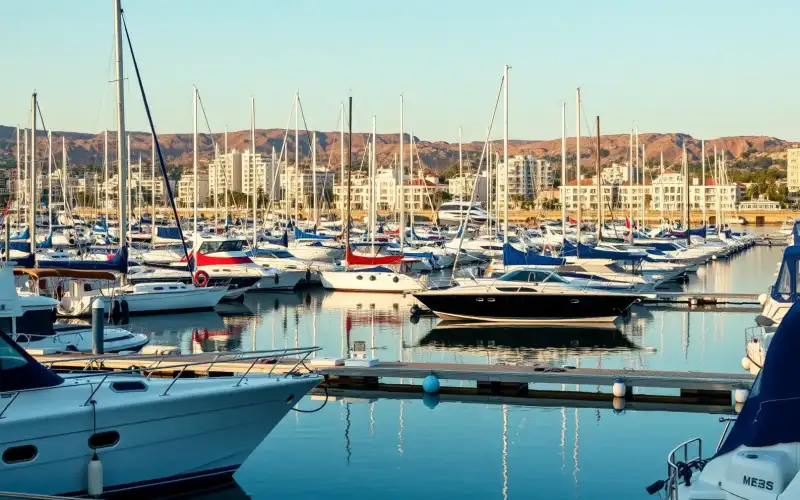
Exit the inner harbour and head southwest toward the outer basins. These areas attract a different clientele: Mediterranean sailors, charter operators, and seasonal visitors. The vessels here range from 18-40 metres and change constantly. On any given Wednesday in July, you might see three different yachts in a single berth. The outer basins lack the intimidating grandeur of the inner harbour but offer something equally valuable: accessibility. You can see how working sailors maintain vessels, how charter operations function, and how the marina serves people who actually use their yachts rather than merely own them.
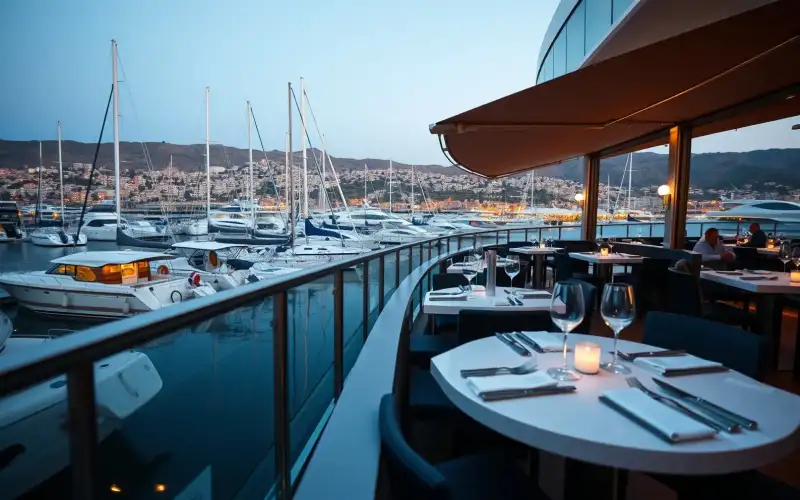
The outer basin promenades also connect to the marina's restaurant and cafe precinct. After 45 minutes of walking, you can pause at one of the waterfront establishments, order a coffee (€3.50-5.00), and continue observation from a seated position.
The Sunset Circuit: 8 p.m.–9 p.m., April–October
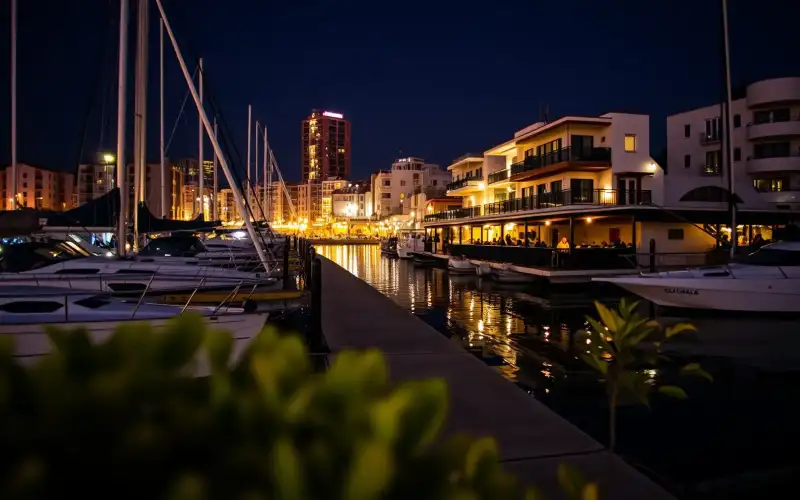
The marina's lighting design, completed in 2016, transforms the entire space after sunset. Subtle uplighting on larger yachts creates dramatic silhouettes. The water's surface, during blue hour (the 20-30 minutes after sunset when the sky retains deep blue colour), mirrors the marina lights with perfect clarity. Walking the inner harbour during blue hour – typically 8:15 p.m. to 8:45 p.m. depending on season – offers a completely different aesthetic from daylight viewing. The glamour becomes more abstract, more atmospheric. Bring a camera with manual exposure capability if you want to capture this light; smartphone cameras struggle with the contrast between lit yachts and dark sky.
Practical Intelligence for Your Marina Visit
Optimal Timing Strategy
The marina experiences predictable crowd patterns. Weekday mornings (Tuesday–Thursday, 7 a.m.–10 a.m.) attract fewer visitors than weekends. Locals walk for exercise; crew members perform maintenance; the atmosphere feels purposeful rather than touristy. Avoid Friday–Sunday afternoons when families and tour groups dominate the promenades.
Weather significantly impacts the experience. Calm mornings (wind under 10 knots) make the water perfectly reflective, enhancing yacht visibility. Strong afternoon winds (common June–August, 15–25 knots) create choppy water that fragments reflections and stirs up dust. Rain actually improves visibility by clearing atmospheric haze, though obviously the experience becomes less pleasant.
What to Bring and Practical Considerations
- Footwear: The marina's limestone paving is attractive but becomes slippery when wet. Wear shoes with decent grip, not sandals or flip-flops. Walking distance is 1–2 kilometres depending on route; comfortable shoes matter.
- Sun protection: No shade exists along the main promenades. Bring a hat and SPF 50+ sunscreen. The Mediterranean reflection intensifies UV exposure by approximately 80%.
- Water: Bring a refillable bottle. Café water costs €2–3 for 500ml. The walk takes 45–75 minutes depending on route; dehydration in summer heat is real.
- Camera: Bring a proper camera if you have one. Smartphone cameras struggle with the dynamic range – bright white yachts against dark water confuse exposure metering. A compact digital camera with manual controls, or even a smartphone with a dedicated camera app offering manual exposure, performs dramatically better.
- Binoculars: Optional but genuinely rewarding. Superyacht deck details – teak railings, custom fabrications, tender davits – become visible at 100+ metres distance with binoculars. You see the craftsmanship that justifies the €50-150 million price tags.
Navigating the Marina Responsibly
The marina is private property, though the waterfront promenades are accessible to the public. Certain areas remain restricted: crew areas, fuel docks, and maintenance zones. Signage marks these clearly. Respect these boundaries. Photography is permitted from public areas, but don't photograph crew members or interiors without permission. Many vessel owners employ security; they're professional but vigilant.
Avoid touching railings, ropes, or any vessel equipment. Superyachts' systems are sensitive and expensive. A carelessly moved rope can disrupt mooring configurations or damage expensive fittings. Treat the marina as you would an art gallery – admire without touching.
What You're Actually Observing: The Economics and Logistics Behind the Glamour
The Real Cost of Superyacht Ownership
Walking past these vessels, most visitors assume the purchase price represents the primary expense. This fundamental misunderstanding becomes evident when you understand the actual economics. A €50 million superyacht typically costs €3–5 million annually to operate – crew salaries (€400,000–800,000 per year for a professional team), fuel (€150,000–300,000 annually), maintenance and repairs (€500,000–1,500,000), insurance (€300,000–600,000), and berth fees at Limassol Marina (€150,000–300,000 depending on berth size and premium location).
The vessel you're admiring, purchased for €60 million, costs its owner approximately €4–5 million yearly simply to exist. This explains why many ultra-wealthy individuals own yachts but rarely use them – the operational cost remains constant whether the yacht sits in the marina or sails the Aegean. It also explains the recent trend toward charter operations, where owners offset costs by renting vessels when not using them personally.
The Crew Presence: What Their Activity Tells You
Observing crew activity reveals whether a yacht is actively maintained or merely stored. Yachts undergoing varnishing, with crew members pressure-washing decks, or with tenders being serviced are actively managed – the owner either uses the vessel regularly or maintains it for potential sale. Yachts with no visible activity, dust on railings, and faded canvas may be mothballed – the owner maintaining the asset but not actively deploying it.
Professional crews typically wear branded polo shirts with the yacht's name or the owner's company logo. The number of crew members you observe correlates directly with vessel size and complexity. A 45-metre yacht typically carries 4–6 crew; a 120-metre superyacht requires 15–25. Observing crew routines – morning deck preparations, tender launches, provisioning deliveries – provides insight into how these vessels actually function as floating homes and mobile bases rather than static symbols.
Seasonal Superyacht Events and Opportunities
While regular marina walking costs nothing, certain seasonal events enhance the experience or create additional opportunities. The Limassol Marina Yacht Show (typically May) features new yacht launches and design exhibitions, though attendance requires paid entry (€15–25). The Christmas season brings festive decorations to larger yachts, with some owners sponsoring evening light displays visible from the public promenades (free viewing).
Charter brokers often position yachts at Limassol Marina during April–May and September–October for Mediterranean charter season. These vessels are actively crewed and frequently prepared for viewings by potential charterers. Walking during these periods, you'll see more activity and more pristine vessels than during winter months when some yachts undergo maintenance or remain essentially dormant.
Beyond the Marina: Contextualising Limassol's Luxury Waterfront
Limassol Marina exists within a broader ecosystem of Mediterranean luxury. Comparable marinas operate in Monaco (Port Hercule), Antibes (Port Vauban), and Palma de Mallorca, yet Limassol offers distinct advantages for superyacht owners: Cyprus's favourable corporate tax structure (0% tax on foreign-source income for non-residents), EU membership providing regulatory clarity, and strategic positioning between European and Middle Eastern sailing grounds.
The marina's development cost €650 million when constructed in 2010–2014. It included 500 berths, residential apartments, restaurants, retail, and hotel facilities. The investment reflected confidence that Limassol would become a major superyacht destination – a prediction that's materialised. Today, approximately 60–80 superyachts are permanently berthed at Limassol Marina, making it one of Europe's top 15 superyacht bases.
This context enriches your marina walk. You're not simply observing luxury symbols; you're witnessing a significant European maritime infrastructure project and the concentration of wealth it represents. The €2–3 billion in vessel value moored here represents genuine economic activity – crew wages, maintenance contracts, provisioning businesses, and insurance arrangements that sustain hundreds of Cyprus-based jobs.
Making the Most of Your Free Marina Experience
The marina walk works best as a complement to other Limassol activities rather than a standalone attraction. Business travellers between meetings can walk the marina in 45 minutes, enjoying fresh air and sensory stimulation without consuming substantial time. Wine enthusiasts heading to the Troodos hills can start their day with a marina circuit, then drive the 90 kilometres to Omodos or Platres, arriving mid-morning. Expat researchers assessing Cyprus living can observe the international community present at the marina – the multilingual conversations, the mix of nationalities, the European and Middle Eastern aesthetics – and gain genuine insight into Limassol's character as an international destination.
Bring a notebook or voice recorder if you're researching Limassol. The marina's design, the yacht types present, the crew nationalities you observe, the provisioning deliveries you see – these details provide material for understanding how the city functions as more than a tourist destination.
The free luxury of Limassol Marina in 2026 persists precisely because it exists without commercial pressure. The marina's revenue derives from berth fees (€150,000–300,000 annually per premium berth), residential sales, restaurants, and hotel operations – not from charging visitors to walk the promenades. This model allows genuine public access to an otherwise exclusive environment. It's a rare privilege in contemporary Mediterranean travel, and one worth exploiting without guilt.

Comments (3 comments)