
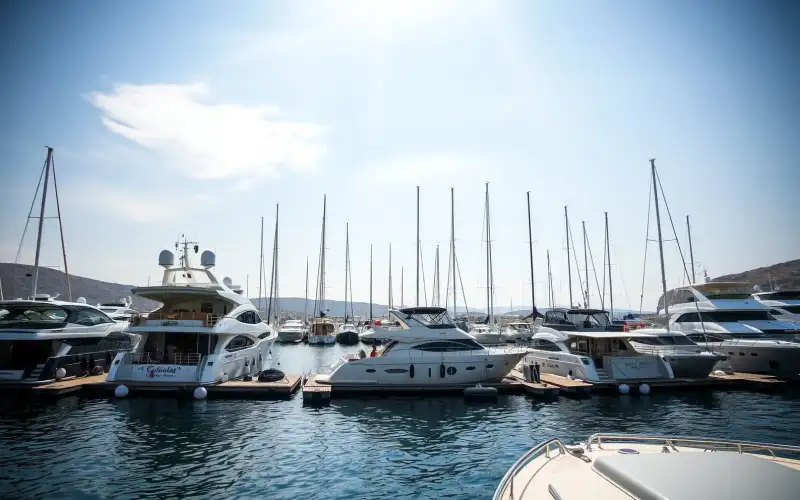
I watched a couple from Hampshire step aboard a 45-foot Beneteau last April, champagne flute in hand, as the morning sun caught the limestone cliffs behind Limassol's eastern breakwater. Within an hour, they were anchored off Akrotiri, watching the coastline dissolve into turquoise shallows. This is the reality of luxury yacht chartering from Limassol Marina—not the glossy brochure fantasy, but something more tangible and achievable than most British travellers assume.
The marina itself has transformed since I first mapped the Cyprus wine route in 2008. Back then, it was a working harbour. Today, it's a 650-berth facility hosting everything from fishing boats to superyachts, with a thriving charter fleet that caters specifically to the British market. If you're considering a yacht charter from Limassol, you're looking at one of the Mediterranean's most accessible luxury experiences—and one where your money stretches considerably further than it would from the Côte d'Azur.
What You'll Learn in This Guide
This article breaks down the complete landscape of luxury yacht chartering from Limassol Marina. You'll understand the price structures for half-day, full-day, and multi-day charters, discover which routes deliver the best experience for your budget, and learn exactly what operators include (and don't include) in their packages. By the end, you'll be equipped to book with confidence, knowing the real costs, the seasonal variations, and the insider details that separate a mediocre day at sea from a genuinely memorable one.
I've spent eighteen years in Cyprus's hospitality and wine sectors, and I've chartered from this marina myself—enough times to spot the operators worth your money and the routes that actually deliver on their promises.
Prerequisites: What You Need Before Booking
Before you contact a charter operator, certain practical realities need addressing. First, passport validity: your UK passport must be valid for the duration of your stay, though Cyprus doesn't require a visa for British citizens staying under 90 days. Second, maritime documentation. If you're planning to skipper the yacht yourself (bareboat charter), you'll need either an International Certificate of Competence (ICC) or equivalent RYA documentation. Most British charterers hold the RYA Day Skipper or Coastal Skipper qualification—both are widely recognized.
Third, physical fitness. While luxury charters aren't mountaineering expeditions, you should be comfortable with boat movement, able to climb narrow companionways, and prepared for sun exposure. Charter operators will ask about mobility issues, and they're not being difficult—they're managing liability and ensuring your safety. If you have concerns, mention them upfront.
Fourth, timing. Limassol's charter season runs year-round, but the sweet spot for British travellers is April through October. July and August bring peak prices and crowded anchorages; May, June, September, and October offer better value and more pleasant conditions. Winter charters (November to March) are possible but require more robust seamanship and come with weather unpredictability.
Fifth, budget allocation. Charter prices are only part of the equation. You'll also pay for mooring fees (if staying overnight), fuel surcharges, skipper gratuities, and provisions. A €2,500 full-day charter can easily become €3,200 once you've added food, drinks, and fuel. Plan accordingly.
Sixth, currency and payment. Most operators quote in euros, though some accept sterling at the day's exchange rate. Booking deposits typically run 25–30% of the charter cost, non-refundable if you cancel within 14 days. Insurance is mandatory and usually included in the base price.
Step 1: Understand the Charter Types and Price Brackets
Limassol's charter market segments into three primary categories, each with distinct pricing and experiences.
Half-Day Charters (4 hours) run from €800 to €1,800 depending on yacht size and season. A typical half-day takes you from the marina to nearby anchorages—Akrotiri Bay, the Akamas Peninsula's western edge, or the Episkopi coastline. These are ideal for first-timers, business travellers on tight schedules, or couples wanting a taster without committing a full day. The catch: you're paying premium per-hour rates, and turnaround logistics mean you lose 30 minutes on each end. A half-day is rarely a bargain, but it's perfect if your time in Cyprus is genuinely limited.
Full-Day Charters (8 hours) cost €1,800 to €4,500, with the variation driven by yacht size, season, and whether you want a crewed experience. A 35-foot monohull costs roughly €2,100–€2,600 in shoulder season (April–May, September–October), rising to €3,200–€3,800 in peak summer. A 50-foot catamaran—roomier, more stable, better for groups—runs €3,500–€5,200. Full-day charters are the sweet spot for most British visitors. You get genuine distance (typically 20–35 nautical miles), time to explore multiple anchorages, and the rhythm of a real sailing day.
Multi-Day Charters (3–7 days) shift into bareboat territory, where you're either skippering yourself or hiring a professional captain. Prices range from €2,800 to €8,500 per day for a bareboat 40-footer, depending on season and whether you want a captain. These charters unlock the Karpas Peninsula, the Troodos foothills' coastal approaches, and multi-island routes toward the Greek islands. They're not budget experiences, but the daily rate drops significantly compared to daily charters—a seven-day charter costs roughly 30% less per day than seven separate one-day charters.
A practical table to guide your decision:
| Charter Type | Duration | Typical Yacht Size | Shoulder Season Price (€) | Peak Season Price (€) | Best For |
|---|---|---|---|---|---|
| Half-Day | 4 hours | 32–38 ft | €900–€1,200 | €1,400–€1,800 | Time-limited visitors, first-timers |
| Full-Day | 8 hours | 35–45 ft | €2,100–€2,800 | €3,200–€4,200 | Couples, small groups, wine country explorers |
| Multi-Day (3–7 days) | Variable | 40–55 ft | €2,800–€4,200/day | €4,500–€6,500/day | Extended holidays, bareboat enthusiasts |
Step 2: Choose Your Route Based on Your Interests
Limassol's geography gives you four distinct charter routes, each with different appeal and seasonal considerations.
The Akrotiri Loop is your closest option—15 nautical miles return. You sail southwest from the marina, passing the British Sovereign Base Area's boundaries, and anchor in Akrotiri Bay or the shallower Episkopi waters. The seabed here is sandy, holding excellent for anchoring. This route takes 2–3 hours including anchor time and works brilliantly for half-day charters or as an aperitif to a longer voyage. The water is typically 2–3°C warmer than deeper offshore areas, making it ideal for April and early May when you want swimming but not full summer heat. Expect to see military aircraft overhead—the base is active—but the anchorage itself is peaceful and the water crystalline.
The Akamas Peninsula Route pushes northwest, covering 25–30 nautical miles and taking 5–7 hours including anchorages. You'll pass Avdimou, the dramatic Aspro cliffs, and anchor near Lara Beach—a loggerhead turtle nesting site where swimming is restricted June through August. This route rewards patient sailors with genuine wilderness. The western Akamas coast is largely undeveloped, backed by pine forest and limestone scarps. Snorkelling here is exceptional; the water clarity and marine life density rival anywhere in Cyprus. The downside: this route kicks up significant swell in spring and autumn, and the anchorages are more exposed than Akrotiri. It's best attempted May through September, and ideally with a skipper if you're not confident in open-water anchoring.
The Karpas Peninsula Route is the ambitious option—60+ nautical miles, requiring a multi-day charter or a very long full-day with minimal anchoring time. You sail northeast toward the Karpas's wild northern coast, where the landscape becomes increasingly remote. Dipkarpaz village, at the peninsula's tip, feels like the edge of civilization. The beaches here are deserted, the water temperature ranges from 16°C in winter to 26°C in summer, and the sense of isolation is profound. This route demands good weather and genuine sailing confidence. Most operators recommend it only May through September, and it's the exclusive domain of bareboat and crewed multi-day charters.
The Blue Lagoon and Trikomo Route heads south-southeast toward Protaras and the Famagusta coast. The Blue Lagoon itself—technically in Turkish-controlled waters—is politically sensitive, and most Cypriot operators avoid it. Instead, the route focuses on the legitimate anchorages around Trikomo and the Kavo Gkreko headland. This is a 35–40 nautical mile journey, best done as a full-day charter or the first leg of a multi-day trip. The advantage: fewer boats, excellent snorkelling, and proximity to the Troodos wine country's eastern edge. The disadvantage: it's further from Limassol, eating into your sailing time.
Step 3: Verify What's Included in Your Charter Package
Here's where the fine print matters. Charter operators in Limassol are generally transparent, but inclusions vary significantly.
Standard inclusions across reputable operators typically cover the yacht itself (obviously), insurance, safety equipment (life jackets, harnesses, flares, first aid), navigation charts and electronics, and a skipper (on crewed charters). Some operators include basic provisions—water, tea, coffee, bread, basic snacks. Fuel is usually included for half-day and full-day charters, but on multi-day bareboat charters, fuel is often charged separately at cost-plus 15–20%.
What's rarely included and will cost extra: alcohol (though some operators allow you to bring your own), prepared meals beyond basic provisions, mooring fees at overnight ports (€15–€40 per night depending on the anchorage's facilities), skipper gratuity (typically 10–15% of the charter cost if you're pleased), and any damage beyond normal wear. Water sports equipment—snorkelling gear, paddleboards—is sometimes included but often rented separately at €10–€25 per person per day.
Before booking, ask explicitly: Is fuel included? Can we bring our own alcohol? What happens if weather forces cancellation? Are snorkelling masks and fins provided? Does the price include provisioning, or do we buy groceries separately? A good operator will have written answers to these questions on their website or will email them within an hour of inquiry.
Step 4: Book Strategically by Season
Limassol's charter pricing follows a strict seasonal calendar, and understanding it saves money.
Low Season (November–March): Prices drop 20–30% from peak rates. A full-day 40-footer costs €1,800–€2,200 instead of €3,200. The trade-off: weather is unpredictable, water temperature is 15–17°C (chilly for swimming), and some operators reduce their fleet or close entirely. Winter charters work for experienced sailors seeking solitude, but they're not ideal for leisure travellers.
Shoulder Season (April–May, September–October): This is the charterer's sweet spot. Prices sit 10–20% below peak, weather is stable (though May can bring wind), water temperature is 19–24°C, and the anchorages are less crowded than summer. A full-day charter costs €2,100–€2,600. If you can travel during these months, do it.
Peak Season (June–August): Prices are at maximum, anchorages are crowded, and the heat (35°C+) can be intense on deck. However, the water is warmest (25–28°C), weather is most predictable, and you'll encounter other sailors and social activity at popular anchorages. If you're bringing children or prioritize guaranteed sunshine, peak season delivers.
Step 5: Navigate Practical Booking and Safety Considerations
Once you've selected your route and season, the booking process itself requires attention.
Contact operators 4–8 weeks in advance for peak season, 2–3 weeks for shoulder season. Limassol has roughly 15–20 active charter companies; the larger ones (operating 10+ yachts) offer better availability and backup if mechanical issues arise. Request references or reviews from previous British clients—most operators will provide them.
Confirm cancellation terms in writing. Most operators require payment of the full deposit (25–30%) within 7 days, with the balance due 30 days before departure. If you cancel within 14 days of your charter, the deposit is typically forfeited. Travel insurance that covers cancellation is wise.
Ask about the skipper's experience and background. A professional skipper should hold an International Master or equivalent certification, speak English fluently, and have logged at least 1,000 nautical miles in Eastern Mediterranean waters. Don't be shy about asking for credentials.
Verify insurance coverage. Your charter company's insurance should cover third-party liability (damage to other vessels or property), hull damage, and personal accident. Ask whether the excess (deductible) is €500 or €2,000—this affects your personal liability if something goes wrong.
Weather contingency is critical. Confirm the operator's policy if weather forces cancellation or truncation of your charter. Reputable operators will offer a full refund or rebooking if conditions are genuinely unsafe; others may offer a discount credit instead. Get this in writing.
Troubleshooting Common Charter Issues
Even well-planned charters encounter friction. Here's how to handle it.
Mechanical failure en route: A professional operator maintains their fleet rigorously, but engine problems happen. Your contract should specify that the operator provides a replacement yacht of equal or greater value at no cost, or a full refund if replacement isn't possible. This is standard practice among reputable operators.
Seasickness: If you're prone to motion sickness, inform the operator beforehand. They can recommend calmer routes (Akrotiri Loop), suggest medication timing, and advise on positioning aboard the yacht (amidships is less motion than bow or stern). A full-day charter with a skilled skipper who minimizes motion is entirely achievable even for sensitive sailors.
Overcrowding at popular anchorages: July and August see 20+ yachts anchored in tight proximity at places like Lara Beach. If you want solitude, avoid these months or request less-popular routes. Your skipper can anchor further offshore or suggest alternative spots—this is where local knowledge earns its value.
Unexpected costs: Fuel surcharges, mooring fees, and skipper gratuities can surprise you. Budget an additional 20–25% beyond the quoted charter price to avoid disappointment. Ask for an itemized estimate before booking.
Seasickness prevention in practice: Start medication (dramamine, scopolamine patches) 30 minutes before departure, not after nausea begins. Eat light, stay hydrated, and keep your eyes on the horizon rather than the deck. Ginger supplements work for some people. A skipper worth their salt will adjust course and speed to minimize motion.
Conclusion: Your Charter Awaits
Luxury yacht chartering from Limassol Marina is neither mystical nor prohibitively expensive. It's a straightforward transaction: you pay €2,000–€4,000 for a full-day experience that would cost double in the French Riviera, and you get genuine sailing in waters that have hosted trade routes for three millennia. The operators are professional, the routes are spectacular, and the logistics are manageable for anyone with basic comfort around boats.
The real decision isn't whether to charter—it's when and where. If you're visiting in May, book a full-day to the Akamas Peninsula. If you're here in September, consider a three-day bareboat to the Karpas. If you're time-limited, a half-day Akrotiri loop still delivers an afternoon you'll remember. The marina is waiting, the yachts are maintained, and the Mediterranean doesn't get less beautiful because you're a first-time charterer. Step aboard with confidence.

Comments (4 comments)