
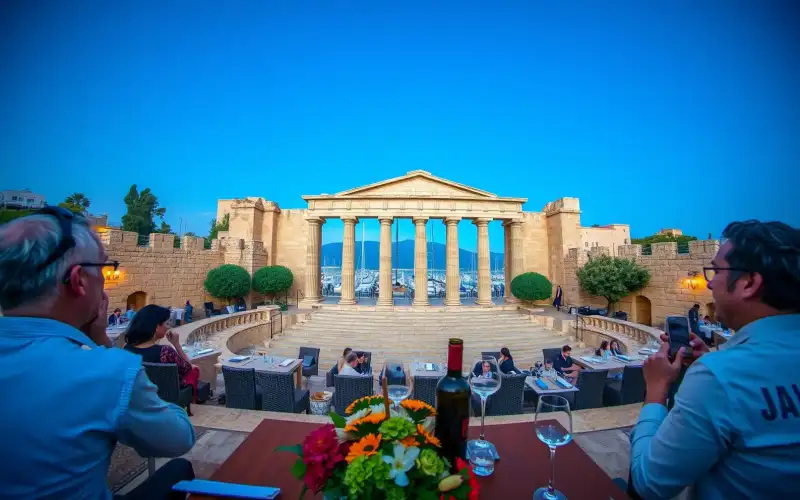
I was standing on the edge of the Curium cliff in late October, watching the sun dip toward the sea, when a British couple in their sixties descended the worn stone steps into the theatre's orchestra. They weren't rushing. They were counting—counting the tiers, counting the centuries, counting backwards through the voices that had echoed here when Rome ruled the Mediterranean. That's what Curium does to you. It doesn't just show you history; it makes you feel the weight of it.
The Curium Ancient Theatre, perched on a promontory near Episkopi in the Limassol district, is one of Cyprus's most visited archaeological sites, and for good reason. Built during the Hellenistic period and substantially enlarged under Roman rule, this open-air theatre commands a view that no modern auditorium could replicate. But visiting requires planning. Access varies seasonally, fees have shifted in 2026, and the site itself presents both challenges and rewards depending on your mobility and interests.
Getting There: Location and Parking
Curium sits approximately 18 kilometres west of Limassol town centre, roughly a 25-minute drive along the A6 coastal highway. The nearest town is Episkopi, home to the British Sovereign Base Area (Akrotiri), which means the approach road is well-maintained but occasionally busy with military traffic—nothing alarming, just a reality of the location.
The main car park is situated at the site entrance, with capacity for around 40 vehicles. In high season (June to September), this fills quickly, particularly on weekends and public holidays. Arrive before 10 a.m. or after 3 p.m. if you want guaranteed parking. There is no overflow parking, so if the main lot is full, you'll need to return later or park on the verge of the access road, though this is not officially designated.
Public transport to Curium is limited. The local bus service (operated by Osmiou) runs sporadically from Limassol, with no direct route to the theatre entrance. A taxi from Limassol costs approximately €35–45 one way; ride-sharing apps operate in the area but are less reliable than in Limassol itself. If you're staying in Limassol and don't have a rental car, arrange transport in advance rather than relying on spontaneous options.
Entry Fees and Hours for 2026
As of January 2026, entry to Curium Ancient Theatre costs €4.50 for adults, with reductions for students (€2.25 with valid ID) and children under six (free). Group rates (10 or more people) are available at €3.50 per person, though you'll need to arrange this through the site office before arrival.
The theatre operates year-round, but hours vary significantly:
- April to October: 8:00 a.m.–7:30 p.m. (daily)
- November to March: 8:00 a.m.–5:00 p.m. (daily)
- Closed: Christmas Day and New Year's Day only
There is no online booking system; tickets are purchased at the entrance kiosk, cash or card accepted. The kiosk staff speak English, Greek, and basic French. During peak season (July–August), expect queues of 15–20 minutes on weekends. If you're visiting in winter, the later sunset means you'll lose daylight by 4:45 p.m., so plan accordingly.
Accessibility: What You Need to Know
This is where Curium presents genuine challenges. The site is not fully wheelchair accessible, and anyone with mobility restrictions should read this carefully before visiting.
The entrance area and museum shop are accessible via a flat, paved path. A disabled parking bay (one space) is available near the entrance. However, entering the theatre itself requires descending approximately 80 stone steps into the orchestra level. There is no lift, no ramp, and no alternative route. The steps are uneven in places, worn smooth by 2,000 years of footfall, and can be slippery after rain.
If you use a wheelchair or have significant mobility limitations, you cannot access the theatre proper. You can view it from the upper rim, which offers excellent sightlines and photographs, but you cannot descend into the seating areas or orchestra. The museum and shop are fully accessible and worth visiting regardless.
For those who can manage stairs but have balance concerns, the site provides no handrails on the descent. Wear sturdy, closed-toe footwear—trainers or hiking boots, not sandals. The upper tiers of seating are steep and exposed; if you're uncomfortable with heights, stay in the lower sections near the orchestra.
Visitors with hearing aids will find the theatre's acoustics remarkable—the site's engineering amplifies sound naturally, which is both a feature and a consideration if you're sensitive to ambient noise.
What to Expect: A Typical Visit
Most visitors spend 45 minutes to two hours at Curium, depending on interest level and pace. Here's a realistic timeline:
First 15 minutes: Ticket purchase, orientation, and exploring the entrance area and small museum. The museum houses artefacts from the site—pottery, coins, inscriptions—and provides context for what you're about to see. It's modest but informative, and the English labelling is clear.
Next 30–45 minutes: Descending into the theatre, walking the orchestra, and climbing the seating tiers. The descent takes 5–10 minutes depending on fitness. Once in the theatre, most people sit for a while, absorbing the view and the atmosphere. Some climb higher to explore the upper tiers; others remain in the lower sections. This part is self-paced and deeply personal—there's no guided tour unless you've arranged one privately.
Final 15 minutes: Returning to the entrance, browsing the small gift shop, and perhaps visiting the café (basic refreshments, €2–6 for drinks and snacks).
The theatre itself is largely unshaded. In summer, the sun is intense; bring water, sunscreen, and a hat. In winter, the wind can be sharp, particularly on the upper tiers. The site has no toilets on the theatre grounds, only at the entrance building. Plan accordingly if you have bladder concerns.
The Experience: What Makes Curium Special
Curium's power lies in its setting and its authenticity. Unlike reconstructed sites, this theatre is genuinely ancient—the stones you walk on have supported feet for over 2,000 years. The orchestra is original, the seating largely original, and the view is unchanged: the Mediterranean stretches endlessly to the south, and on clear days, you can see the Akamas Peninsula to the west.
The theatre once held 3,500 spectators for dramatic performances, athletic competitions, and public gatherings. Roman-era inscriptions carved into the stones hint at the names of wealthy patrons who funded repairs and renovations. Walk slowly, read the stones, and you're reading a history written in marble and limestone.
The best time to visit is late afternoon (4:00–6:00 p.m. in summer, 3:00–5:00 p.m. in winter), when the light softens and fewer tourists remain. The theatre feels different when it's quieter—less like a tourist attraction, more like a place where something genuinely mattered once.
Nearby Points of Interest
Curium doesn't exist in isolation. Several archaeological and cultural sites are within easy driving distance:
| Site | Distance from Curium | Travel Time | Entry Fee (2026) |
|---|---|---|---|
| Curium Basilica (early Christian church ruins) | 500 metres | 10 minutes walk | Free |
| Episkopi Museum (local history) | 3 km | 5 minutes drive | €3.00 |
| Limassol Castle (Frankish-era fortress) | 18 km | 25 minutes drive | €4.50 |
| Kolossi Castle (medieval sugar factory) | 22 km | 30 minutes drive | €4.50 |
| Avdimou Beach (swimming) | 6 km | 10 minutes drive | Free |
The Curium Basilica is particularly worth visiting if you have time. It's a five-minute walk from the theatre car park, though the path is unmarked. Ask the entrance staff for directions; they're used to this question. The basilica dates to the early Christian period (5th–6th centuries) and offers a different perspective on Curium's long history.
Practical Tips for Your Visit
Bring more water than you think you'll need. The site has no fountain, and the walk up and down the steps in heat is dehydrating. A two-litre bottle per person is reasonable for summer visits.
Photography is permitted and encouraged. The theatre photographs beautifully, particularly in golden-hour light. If you're serious about photography, visit in shoulder seasons (April–May or September–October) when light is softer and crowds are smaller.
If you're visiting in winter, the site is dramatically less crowded but also less welcoming weather-wise. Rain is possible from November to February, and the steps become genuinely hazardous when wet. Check the forecast before visiting in winter months.
Allow time to sit in the theatre, not just walk through it. This isn't a site you can fully appreciate in 15 minutes. The value is in stillness, in letting the place work on you.
Planning Around Your Limassol Stay
If you're based in Limassol for a week or longer, Curium works well as a half-day excursion. Combine it with lunch in Episkopi village (basic but genuine local tavernas) and a swim at Avdimou Beach on the return journey. The entire outing takes 4–5 hours, leaving you time for other activities.
If you're visiting for only a day or two, prioritise Curium over other archaeological sites in the region unless you have a specific research interest. It's the most visually impressive and historically significant Greco-Roman theatre on the island.
Final Thoughts
Curium Ancient Theatre is not a museum piece. It's a working reminder that human culture—drama, gathering, spectacle, community—has ancient roots. The €4.50 entry fee is modest for what you're accessing: 2,000 years of history, a view that hasn't changed, and the tangible presence of a civilisation that mattered.
The challenge is accessibility. If you have mobility restrictions, the site will frustrate you. If you're reasonably fit and prepared for stairs, it will reward you. Either way, plan carefully, bring water, wear proper shoes, and give yourself time. Curium doesn't rush, and neither should you.



Comments (4 comments)