
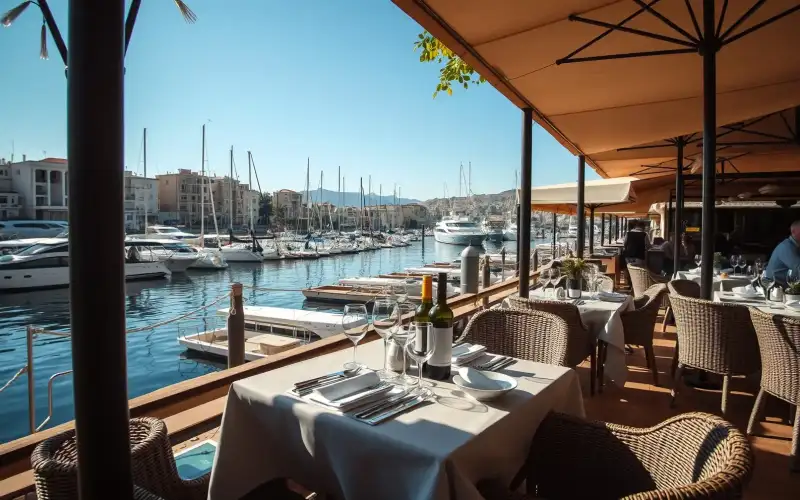
I arrived at Loel winery on a Thursday afternoon in October, dusty from a two-hour bus ride from Limassol, expecting to find myself alone in some pretentious tasting room. Instead, I found a family of four from Bristol sharing a table with a retired couple from Nicosia, all of them swirling glasses of Xynisteri under the gaze of owner Loizos Loizou himself. He was pouring without ceremony, cracking jokes about his father's disastrous 1982 vintage, and charging €3 per glass. That moment crystallized something I'd been circling for months: Cyprus's wine routes don't require deep pockets or organized tours. They require only patience, curiosity, and a willingness to take the bus.
Why the Cyprus Wine Route Matters (And Why Budget Travelers Miss It)
Cyprus produces around 5 million litres of wine annually, yet fewer than 15,000 international visitors explore the wine regions each year. Compare that to Tuscany's 2.5 million, and you realize what a gap exists between the island's viticultural reputation and its tourism footprint. The Troodos Mountains and surrounding foothills—particularly the villages of Larnaca, Limassol, and Paphos districts—have been producing wine since the Venetian era. Today, the island hosts over 80 licensed wineries, ranging from industrial operations bottling 500,000 litres annually to family estates producing fewer than 5,000 bottles.
The budget traveler's advantage is structural. Unlike Napa Valley or Bordeaux, where tasting fees start at €25 and climb steeply, Cyprus's smaller producers operate on different economics. Land is cheaper. Labor is cheaper. Marketing budgets are negligible. This means you can taste exceptional wine—genuinely excellent stuff, award-winning stuff—for a fraction of what you'd pay in Western Europe. A full tasting at Loel (five wines, small food pairing) runs €12. At ETKO, Cyprus's oldest cooperative winery founded in 1947, a comprehensive tasting with snacks costs €8.
The real barrier isn't cost. It's logistics. The wine villages cluster in the Troodos foothills, scattered across 40 kilometers of winding mountain roads. Without a car or organized tour (which easily run €80–120 per person), access feels locked away. This guide exists to unlock it.
The Big Players: Loel and ETKO on a Budget
Loel Wines sits in the village of Vouni, 28 kilometers northwest of Limassol, at 650 meters elevation. The winery occupies a renovated stone building with a small tasting room and a terrace overlooking vineyard slopes that drop toward the coast. Loizos Loizou took over the family operation in 2003 and immediately began experimenting with indigenous varieties—Xynisteri, Mavro, Maratheftiko—rather than chasing international grapes. His 2021 Xynisteri won a bronze at the Decanter World Wine Awards. His Maratheftiko, a dark, spicy red from a nearly extinct variety, tastes like nothing you'll find in a supermarket.
Getting there: Take the 32 bus from Limassol's central station (Kanonos Street, near the Old Port) toward Troodos. It departs at 06:45, 09:15, 12:30, and 15:45 on weekdays. The journey takes 90 minutes and costs €3.50. Ask the driver to drop you at Vouni village center. From there, Loel is a 15-minute walk uphill through the village. Alternatively, if three or four of you travel together, a shared taxi (call ahead through your hotel) runs about €35–40 total from Limassol, splitting to roughly €9–10 per person.
Tasting hours are 10:00–17:00 daily except Sundays. No appointment needed for groups under six. The €12 tasting includes five wines and a small plate of local cheese and olives. If you buy a bottle (most range €10–16), the tasting fee drops to €8. Loizos often sits in the tasting room; if he's there, ask him about the 2018 Maratheftiko. He'll talk for 45 minutes, and you'll learn more about Cypriot wine than any formal education could teach.
ETKO (Enosis Thessalon Kyprou Oinou) occupies an industrial complex in Limassol itself, on Constantinou Palaiologou Street, just east of the city center. This changes everything logistically. You can reach ETKO by walking or taking the 11 or 12 bus from the Marina area. The cooperative was founded by 120 small-scale producers who pooled resources to build a shared winery. Today, it represents over 2,000 members across the island. The tasting room is functional rather than charming—concrete floors, basic furniture—but the wines are serious. ETKO produces the island's most widely exported wines, including the Commandaria, a fortified wine with Protected Designation of Origin status dating back to the Crusades.
Tasting costs €8 for a flight of six wines with snacks (cheese, bread, dried fruit). Hours are 10:00–18:00 Monday to Friday, 11:00–17:00 Saturday, closed Sunday. The cooperative also runs a small shop where you can buy bottles at wholesale prices: a decent Xynisteri for €5.50, a Mavro for €6. This is where locals buy wine for picnics and dinner parties. If you're planning to stock a beach cooler, ETKO is your supply line.
Hidden Gems: The Wineries Nobody Visits
Once you've tasted at Loel and ETKO, the real adventure begins. Three smaller estates deserve your attention, and all are accessible by bus or shared transport.
Vasilias Wines (Pelendri)
Pelendri village sits at 900 meters elevation, deep in the Troodos, about 35 kilometers from Limassol. Vasilias is a 12-hectare family operation run by brothers Andreas and Nicos Vasiliades, who inherited the vineyard from their grandfather and have spent 15 years modernizing it without abandoning tradition. Their 2019 Xynisteri is mineral and bright; their Mavro has an almost Burgundian elegance. Tasting costs €10 for five wines, no food pairing. The brothers speak English and are genuinely interested in visitors—not as revenue streams but as people who've made the effort to reach them.
Getting there is the challenge. The 32 bus from Limassol passes through Pelendri, but the schedule is sparse (departs 06:45, 12:30, returning 07:30, 14:00). If you time it right, you can spend three hours in the village, taste at Vasilias, eat lunch at one of the two tavernas, and catch the return bus. Alternatively, a shared taxi from Limassol runs €40–50 for up to four people. Vasilias opens 10:00–17:00 daily; call ahead (they have a Facebook page) to confirm someone's there.
Tsiakkas Winery (Omodos)
Omodos is the wine village most tourists actually visit, largely because it's picturesque—narrow stone streets, a central square with a 15th-century monastery, cafés serving local sweets. Tsiakkas sits on the village edge, a small producer making about 8,000 bottles annually from a 4-hectare vineyard. Owner Christoforos Tsiakkas is in his sixties, soft-spoken, and makes wine the way his father did: naturally, without excessive intervention. His 2020 Mavro is rough and honest, the kind of wine that tastes better after the second glass. Tasting costs €8 for four wines; if you buy a bottle, he throws in a small glass of his homemade zivania (grape spirit, 40% ABV) at the end.
Omodos is 32 kilometers from Limassol via the 30 bus, which departs at 08:00, 13:00, and 17:00 on weekdays (€2.80, 50 minutes). Tsiakkas opens 10:00–18:00 daily. Spend an hour there, walk the village, eat at Taverna Omodos (mains €7–12), and catch the return bus. Total cost per person: €6 transport, €8 tasting, €10 food = €24.
Keo Winery (Limassol Outskirts)
If the mountain villages feel too remote, Keo offers a middle path. It's the island's largest winery by volume (producing 8 million litres annually) but operates with surprising accessibility. The main facility sits on the outskirts of Limassol, just off the Paphos road. Tasting is €5 for a flight of five wines in a modern room overlooking the production facility. It's less intimate than family estates, but the wines are clean and well-made, and you'll learn how industrial-scale winemaking actually works. Many tastings include a 15-minute tour of the production floor.
You can reach Keo by taking the 16 bus from central Limassol (€1.50, 20 minutes) or walking if you're staying near the Marina (about 45 minutes through the industrial zone). Hours are 10:00–17:00 Monday to Friday, 11:00–16:00 Saturday, closed Sunday.
Transport Hacks: Getting Around Without a Car
The Cyprus public bus system (OSYPA in Limassol) is reliable, cheap, and surprisingly extensive. Most routes cost €1.50–4 per journey. Buses run roughly 06:30–19:00 daily, with reduced schedules on weekends. The central station (Kanonos Street) is the hub for wine-country routes.
For €15, you can buy a 10-journey ticket valid on any route. If you're planning three or four winery visits over a week, this pays for itself immediately. Download the OSYPA app or grab a printed schedule at the station. The app is in Greek and English; it's not fancy, but it works.
Car-sharing is another option. Blablacar operates in Cyprus and lists daily rides from Limassol to Troodos villages. A typical share costs €8–12 per person. You're traveling with locals or other tourists, which adds a social element. Alternatively, if you're traveling with two or three others, hiring a car for one day (€35–50 from a local agency) and splitting the cost makes sense. Budget rental companies like Thrifty and Hertz operate from Limassol airport; rates start at €25 per day for a basic hatchback.
Taxis are expensive for wine touring (€50–70 per journey), but a negotiated day rate with a driver willing to wait works out to roughly €120–150 for eight hours. Split four ways, that's €30–37 per person, which is reasonable if you're making multiple stops.
Picnic Spots and Scenic Views
The real magic of budget wine touring is combining tastings with outdoor eating. Buy a bottle at ETKO (€5–8), pick up bread and cheese at a village shop, and eat overlooking the mountains. Three spots stand out:
Vouni Viewpoint (near Loel)
After tasting at Loel, walk uphill through the village to a small church. Behind it, a dirt track leads to an open ridge with views toward the coast. Spread a blanket, open your Loel Xynisteri, and you've created a moment that luxury tours charge €150 to orchestrate. Cost: €0.
Omodos Central Square
The village square has benches, shade from plane trees, and a small grocery shop selling local cheese, bread, and cured meats. A picnic here—bottle of Tsiakkas wine, local halloumi, olives, bread—costs about €12 total and feels quintessentially Cypriot.
Troodos Mountain Picnic Area
If you're making the journey to Pelendri or beyond, the Troodos Mountain complex (at 1,952 meters, Cyprus's highest point) has designated picnic areas with tables and water. It's 45 minutes' drive from Limassol. Bring wine, food, and spend an afternoon at elevation where the temperature is 8–10 degrees cooler than the coast.
What Not to Do: Common Mistakes
Showing up without checking hours is the most common error. Many small wineries close Sundays entirely or open only by appointment in winter months. Call or check Facebook before traveling. Similarly, don't expect to taste at every winery on a single day. Three tastings maximum is realistic; more than that and your palate collapses. You'll taste the fourth winery's wine as an undifferentiated blur.
Another mistake: assuming the biggest or most famous winery is the best. Keo and ETKO are excellent, but they're industrial operations. The real pleasure lies in smaller places where you're tasting someone's life work, not a product line. Spend your time at Vasilias or Tsiakkas, not at the 50,000-visitor-per-year factory.
Finally, don't skip the bus. Yes, it's slower than a car. Yes, the routes are indirect. But you'll see villages that organized tours bypass entirely. You'll sit next to locals heading to the market. You'll understand the landscape at a human pace rather than through a car window. The bus is the real Cyprus wine experience.
The Economics of Budget Wine Tourism
A realistic budget for one person, one day, visiting two wineries and having lunch:
| Item | Cost |
|---|---|
| Bus transport (round trip) | €7 |
| First winery tasting | €10 |
| Second winery tasting | €8 |
| Lunch (taverna or picnic) | €12 |
| Wine bottle to take home | €7 |
| Total | €44 |
That's a full day of wine tourism—two professional tastings, food, a souvenir bottle—for under €50 per person. If you're traveling with a partner, you're looking at €88 for two people. Add a third person and costs drop further through transport sharing. This is achievable luxury.
Closing Thoughts: Why This Matters
Cyprus's wine regions remain genuinely undiscovered by British travelers, which is strange given how many of you visit the island. The wine is excellent. The producers are welcoming. The landscapes are stunning. The cost is negligible. The only barrier is the assumption that wine tourism requires money, planning, and organized structure. It doesn't. It requires curiosity, a bus schedule, and willingness to get slightly lost in a mountain village.
I've spent the last decade writing about wine regions across Europe—Burgundy, Tuscany, the Douro Valley—and I've paid premium prices at every turn. Cyprus offers something those places stopped offering years ago: genuine access. You're not a tourist being processed through a tasting room. You're a person who showed up, took the bus, and wanted to taste wine. That simplicity, that directness, is the real luxury.

Comments (4 comments)