
The Soul of Limassol's Coffee Culture Lies in the Old Town
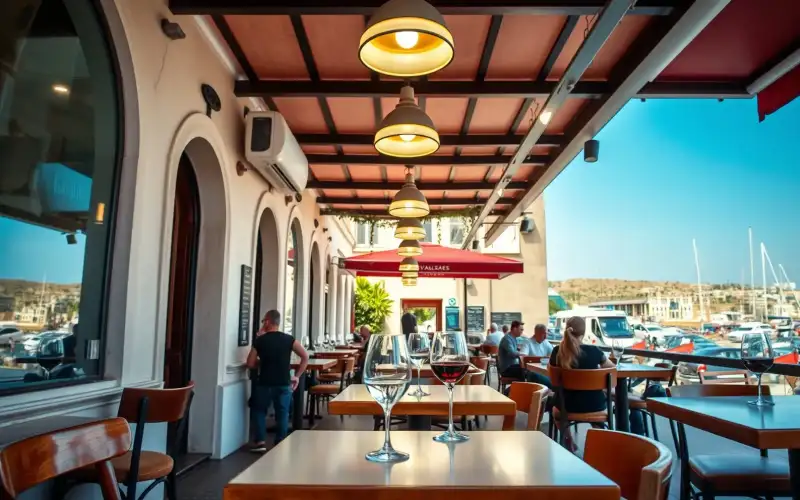
I was sitting on a plastic chair outside a nameless cafe on Agiou Andreou Street in April 2026, watching a 78-year-old man read the same newspaper he'd apparently been reading since 1987, when it struck me: this is where Limassol's real coffee culture lives. Not in the gleaming marina cafes with their flat whites and Instagram-friendly latte art, but here, in the Old Town's labyrinthine streets, where a sketo—a tiny cup of black Turkish coffee—costs €1.50 and comes with a small glass of cold water that tastes like it's been poured from the same jug since the British left.
The Limassol Old Town, or Palaia Poli as locals call it, sprawls behind the castle and stretches toward the medieval streets that form a dense grid of narrow lanes, shuttered stone buildings, and cafes that operate on a rhythm entirely their own. This is not the Limassol of the waterfront promenades or the shopping district—it's the working heart of the city, where you'll find pensioners, schoolchildren between classes, and an increasing number of young Cypriot professionals who've discovered that a proper coffee in the Old Town costs half the price of one in the new districts.
The coffee culture here isn't fashionable. It's functional, ritualistic, and deeply rooted in three centuries of Ottoman and Greek tradition. Understanding Limassol's Old Town cafes means understanding that coffee isn't a beverage to be consumed while checking your phone—it's a social anchor, a reason to sit for an hour, to argue about football, to conduct business, to exist in public space without buying anything else.
The Traditional Kafeneio: Where Time Operates Differently
A proper kafeneio—the traditional Greek coffee house—is not difficult to spot in the Old Town. Look for the plastic chairs (always plastic, never wood), the faded awnings, the absence of music, and the demographic that skews heavily toward men over 60. These establishments are the backbone of Limassol's Old Town, and they operate according to unwritten rules that tourists rarely understand.
Kafeneio Yiannis: The Unofficial Headquarters
If you're going to visit one traditional kafeneio in Limassol's Old Town, make it Kafeneio Yiannis on Anexartisias Street, three blocks north of the castle. Yiannis himself—a man of approximately seventy-five with a perpetually bemused expression—has been running this place since 1989, which makes it one of the Old Town's institutions. The cafe occupies a corner spot with perhaps twelve plastic chairs facing the street, a small counter where Yiannis prepares coffee on a traditional briki (a small copper pot), and walls decorated with old photographs of Limassol from the 1950s and 60s.
The menu consists of coffee (sketo, metrio, or glyko—black, medium, or sweet), water, and occasionally loukoumades (honey puffs) on Friday mornings. A sketo costs €1.50, a metrio €1.80. Yiannis makes coffee the old way, heating the briki over a gas flame, waiting for the foam to rise three times before pouring. A single coffee takes five minutes. You'll sit, you'll wait, and in that waiting you'll understand something about Mediterranean time that no guidebook can teach you.
The clientele is almost exclusively local. On weekday mornings, you'll find construction workers, delivery drivers, and retired dock workers. Around 2 PM, schoolchildren flood in for quick coffees between classes. By evening, the same men who were there at 8 AM return for another hour of sitting and conversation. No one rushes. No one uses their phone. In 2026, this feels radical.
Ta Nisiotika: The Island Specialty Spot
Two streets over, Ta Nisiotika on Saripolou Street operates from a slightly larger space with perhaps twenty seats, but maintains the same traditional ethos. The owner, Maria, sources coffee from a roaster in Paphos and has strong opinions about how it should be prepared. A sketo here costs €1.60, but the quality is noticeably higher—the coffee has a darker, more complex body than most Old Town kafeneia. Maria also makes traditional Cypriot loukoumades by hand, rolling them in honey and walnuts. Order these on a Friday or Saturday morning and you'll understand why people return.
The space itself is unremarkable—white-painted walls, the same plastic chairs, a counter with a traditional briki. But there's a subtle difference: the customers here tend to be slightly younger, more mixed gender, and there's a sense that people come here intentionally rather than by habit. Maria's knowledge of her coffee matters. She'll ask how you like it, remember your preference next time, and explain the difference between beans from different regions. For a traditional kafeneio, this level of engagement is unusual.
The Modern Wave: New Generation Roasters & Specialty Cafes
Over the past five years, Limassol's Old Town has begun attracting a different kind of cafe owner—young Cypriots educated abroad, returning with experience in Melbourne coffee culture or Scandinavian cafe design, determined to establish something different while respecting the Old Town's character. These cafes represent a genuine evolution rather than gentrification, because they haven't displaced the traditional kafeneia. Instead, they've opened in previously abandoned buildings, attracting customers who wouldn't have ventured into the Old Town otherwise.
Caffe Sano: The Roastery Standard Bearer
Caffe Sano, located on Ionos Street near the old market area, is the Old Town's most serious specialty coffee operation. The space is modest—exposed stone walls, high ceilings, a visible roasting setup in the back corner—but the coffee is genuinely excellent. Owner Demetris worked in specialty coffee in London for six years before returning to Cyprus in 2022, and it shows in every aspect of the operation. The espresso is pulled with precision, the pour-overs are prepared with attention to water temperature and pour technique, and the flat whites have the kind of velvety microfoam that suggests someone has actually trained on the equipment.
Prices here are higher than traditional kafeneia—€4.50 for a specialty coffee, €5.50 for a pour-over—but still reasonable for the quality. The customer base is mixed: some tourists, but predominantly young local professionals who've discovered that Demetris's cappuccino is worth the walk into the Old Town. The cafe opens at 7 AM and serves pastries from a local bakery on Agiou Andreou Street. The crowd thins by 11 AM, making mid-morning an ideal time to visit if you want conversation with Demetris about his sourcing or coffee philosophy.
Ellinikon: The Bridge Between Tradition and Modernity
On Saripolou Street—apparently the Old Town's cafe thoroughfare—Ellinikon represents a gentler evolution. The space blends traditional kafeneio aesthetics (plastic chairs, simple tables, white walls) with slightly better lighting and a broader menu that includes sandwiches, salads, and freshly squeezed juices alongside traditional coffee. Owner Sophia has been here since 2019 and has managed the delicate trick of making the space welcoming to both seventy-year-old regulars and twenty-five-year-old remote workers.
The coffee at Ellinikon is prepared traditionally on a briki but served with options: you can have it the traditional way, or request an espresso-based drink. A traditional sketo costs €1.80, while a flat white is €3.80. The pastries are excellent—sesame rings, cheese pies, and spinach pastries from a local baker. The space never feels crowded, which is unusual for a cafe that operates from 6:30 AM to 8 PM daily. The clientele shifts throughout the day: early morning workers and pensioners, midday office workers, evening loungers.
The Practical Guide: Where to Go & What to Expect
Geographic Navigation & Best Times to Visit
Limassol's Old Town is compact—you can walk from the castle to the northern edge in about fifteen minutes—but the narrow lanes create a sense of disorientation that works in the area's favor. The main spine runs from the castle northward along Agiou Andreou Street, but the best cafes are tucked into side streets. Saripolou Street, running east-west, hosts at least four quality cafes within a three-minute walk of each other. Anexartisias Street, parallel to Agiou Andreou, is where you'll find Yiannis and several other traditional spots.
Timing matters significantly in the Old Town. Between 7 and 9 AM, the cafes fill with workers grabbing quick coffees before their shifts—this is the authentic Old Town moment, when the space feels most vital. By 10 AM, most workers have left and the cafes quieten considerably. Midday (12-2 PM) brings a brief surge as people take coffee breaks or meet for quick meetings. The afternoon (3-5 PM) is schoolchildren territory. Evening (6 PM onward) brings a more relaxed crowd, often older men and couples meeting after work.
Parking is difficult in the Old Town—your best option is the municipal car park on Ionos Street near Caffe Sano, which costs €1.50 per hour (as of 2026). Alternatively, the castle car park is a five-minute walk away and slightly cheaper at €1.20 per hour. Walking from the marina or new town takes about twenty minutes, which most visitors find manageable.
Price Guide & Budget Planning
Traditional kafeneio coffee (sketo, metrio, or glyko) ranges from €1.50 to €2.00. A glass of water is always free and always provided. Pastries, when available, cost €1.50 to €3.00. At traditional places, you'll spend €2.00 to €3.50 per visit.
Specialty cafes charge €3.50 to €5.50 for single-origin espresso drinks, €4.50 to €6.00 for pour-overs or filter coffee. Pastries are €2.00 to €3.50. Budget €5.00 to €8.00 per visit.
Hybrid cafes like Ellinikon fall somewhere in the middle: traditional coffee at €1.80 to €2.20, specialty drinks at €3.50 to €4.50, food at €3.00 to €6.00. Plan €4.00 to €7.00 per visit.
Cultural Expectations & Etiquette
In traditional kafeneia, you don't order at a table—you approach the counter, order your coffee, pay immediately (usually €1.50-€2.00), and then find a seat. The coffee will be brought to you. Tipping isn't expected but leaving coins is appreciated. In specialty cafes, you order and pay at the counter before receiving your drink. Sitting for extended periods (one to two hours) over a single coffee is completely normal and expected. No one will rush you. Using your phone is acceptable but subtle—locals conduct quiet conversations or read newspapers rather than working on laptops or taking photos.
In very traditional kafeneia, you might be the only woman or non-local present. This isn't unwelcoming—it's simply the demographic reality. You'll be treated with courtesy, but the space operates primarily for its regular clientele. If you're a solo woman visitor, Ellinikon or Caffe Sano might feel more comfortable than Kafeneio Yiannis, though you won't be made unwelcome anywhere.
Beyond the Cup: What the Cafes Reveal About Limassol
The Old Town's cafes aren't interesting simply because they serve good coffee—though many do. They're interesting because they represent something increasingly rare in Mediterranean cities: spaces organized around human presence rather than consumption. A traditional kafeneio expects you to occupy a chair for an hour or more over a €1.80 coffee. The economics only work because the proprietor understands that the space itself—the social anchor, the gathering point—is the product, not the beverage.
This creates a particular kind of urban ecology. The Old Town's cafes host informal networks: contractors meeting clients, pensioners conducting daily social rituals, young people finding spaces where they can study without pressure to buy multiple items. The cafes are, in a very real sense, public spaces that happen to serve coffee rather than coffee shops that happen to be public spaces. This distinction matters, especially in an era when most commercial spaces are designed to maximize transaction velocity.
The rise of specialty coffee in the Old Town—represented by places like Caffe Sano—doesn't contradict this. Demetris's cafe succeeds because he's maintained the same assumption: the space is for lingering, for conversation, for being present. He simply elevated the quality of the coffee and the attention to detail. The traditional and modern cafes coexist because they serve different needs for overlapping populations.
Where This Fits Into Your Limassol Visit
If you're visiting Limassol for wine tourism—exploring the nearby Troodos wineries or visiting producers in the Krasochoria region—the Old Town's cafes offer an essential counterpoint. Wine tastings are scheduled, formal, structured. The Old Town cafes are unscheduled, informal, organic. Spending an hour at Kafeneio Yiannis or Ellinikon between winery visits provides a recalibration, a return to Cypriot rhythms that exist outside the tourism infrastructure.
For business travelers staying in the marina district or the new town, the Old Town cafes offer escape from the corporate aesthetic. They're walkable from most accommodations—fifteen to twenty minutes maximum—and they operate on a schedule that aligns with work breaks. A midday coffee at a traditional kafeneio costs less than a single drink at a marina cafe and provides genuine human interaction rather than service-sector hospitality.
The Old Town's cafes also provide insight into contemporary Cyprus that no museum or historical tour can match. You're seeing how Cypriot people spend their time when they're not working or touring. You're observing social structures, economic patterns, generational differences. This is anthropology conducted over a small cup of coffee.
Final Observations: The Future of the Old Town Cafe Scene
In 2026, Limassol's Old Town is at an inflection point. The traditional kafeneia continue to operate, but their customer base is aging. The specialty cafes attract younger customers and tourists, but they risk being absorbed into a globalized cafe aesthetic that erases local distinctiveness. The hybrid spaces—cafes like Ellinikon that blend traditions—might represent the sustainable middle ground.
The municipality has invested in infrastructure improvements: better lighting, restored facades, improved access. These changes are mostly positive, but they also accelerate change. Each year, another shuttered building becomes a cafe or restaurant. Each year, property values inch upward. At some point, the economics that allow a kafeneio to operate on thin margins might become unsustainable.
For now, though, the Old Town remains authentic. Kafeneio Yiannis still makes coffee the same way it did in 1989. Maria still prepares loukoumades by hand. Demetris still sources beans with intention. These cafes deserve visits not because they're quaint or nostalgic, but because they represent genuine alternatives to the standardized cafe experience that dominates most urban spaces. In an era of homogenization, that matters.
Comments (4 comments)