
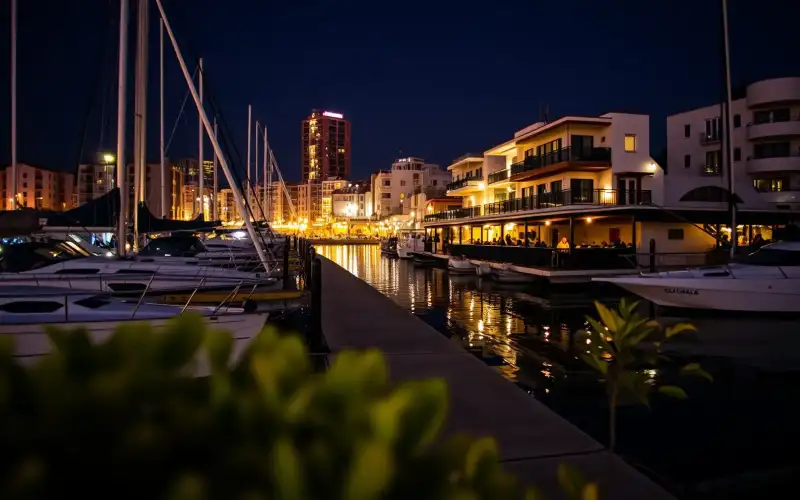
I watched a property agent in Limassol last month show a young couple from Manchester a one-bedroom apartment overlooking the marina. The asking price was €850 per month. The husband's face told the whole story—not quite disbelief, but something close to it. "That's less than half what we pay in Stockport," he said. His wife was already taking photographs. Within an hour, they'd signed a six-month lease.
That scene captures the central question facing anyone considering Limassol: Is it genuinely cheaper to live here, or is that perception built on selective comparisons with London and the South East? The answer, as with most things worth examining, is more nuanced than the Instagram version suggests.
The Housing Reality: Where Your Money Actually Goes
Let's start with the obvious. Limassol's rental market in 2026 sits at a peculiar crossroads. A one-bedroom apartment in the city centre—say, near the Old Town or the marina—runs between €700 and €1,100 monthly. A two-bedroom in the same areas costs €950 to €1,500. Move to the quieter neighbourhoods like Agios Athanasios or Parametros, and you're looking at €600–€900 for a one-bedroom, €800–€1,200 for two.
The catch is location specificity. An apartment with sea views or within the new marina development commands a premium—often 20–30% above comparable units two streets inland. I've seen furnished studios in the Old Town listed at €550; I've also seen unfurnished two-bedrooms in the same postcode at €1,400. The variance depends entirely on renovation standards, orientation, and whether the landlord believes you're a tourist or a serious resident.
Rental vs. Purchase: The Long Game
For those considering purchase rather than rent, Limassol property prices have risen steadily since 2020, though not at the pace of Paphos or Nicosia. A modest one-bedroom apartment costs between €180,000 and €280,000, depending on age and location. Two-bedroom properties range from €250,000 to €400,000. Beachfront or marina-adjacent units jump to €500,000–€800,000 and beyond.
The rental yield for investors typically sits at 4–5% annually, which is respectable but not spectacular. What matters for expats considering purchase is the total cost: property tax (0.1% annually), municipal fees (€200–€400 yearly), and maintenance. A €250,000 apartment will cost roughly €350–€500 per month in combined ownership expenses, excluding utilities. That's competitive with premium rentals, but only if you're staying long-term and can navigate Cyprus's property transfer process—a bureaucratic adventure in itself.
Utilities and Hidden Housing Costs
Here's where many newcomers stumble. Electricity in Limassol runs high because air conditioning is non-negotiable from May through September. Summer bills for a two-bedroom apartment average €120–€180 monthly. Winter is gentler—€40–€70. Water costs €30–€60 monthly, depending on consumption. Internet and mobile packages range from €25–€50 for decent broadband and phone service.
Rubbish collection, handled by the municipality, costs €80–€120 annually. Building maintenance fees (if renting in a complex) add €30–€100 monthly, though this varies wildly. Some buildings include it in the rent; others bill separately. Always ask.
Food and Dining: The Mediterranean Advantage
The supermarket basket tells a revealing story. A litre of local milk costs €0.95–€1.20. A dozen eggs, €2.50–€3.00. A kilogram of local tomatoes in season (May–September) is €1.20–€1.80; imported winter tomatoes double that. Bread from a local bakery runs €0.60–€0.90 per loaf. A kilogram of decent local cheese—halloumi, feta, or graviera—ranges from €6 to €12.
The real savings come from seasonal shopping. Between April and October, Limassol's farmers' markets overflow with produce: courgettes, aubergines, melons, grapes, figs. A week's worth of fresh vegetables for two people costs €15–€25 if you shop smart. A comparable haul in London would be £40–£60.
Restaurant Economics
Dining out reveals the class divide starkly. A traditional Cypriot meze in a neighbourhood taverna—grilled halloumi, souvlaki, salads, bread, wine—costs €12–€18 per person. The same meal in the marina's designer restaurants runs €28–€45. A coffee at a high-street café is €2.50–€3.50; at a marina-front establishment, €4.50–€6.00. A beer in a traditional bar costs €3.50–€4.50; in trendy venues, €5.50–€7.00.
The pragmatic approach: eat like locals for lunch (tavernas and traditional spots), reserve restaurants for weekends, and you'll spend €400–€600 monthly on dining out as a couple. Add another €250–€400 for groceries and groceries, and food becomes your second-largest expense after housing.
Wine Country Advantage
One unexpected benefit of living in Limassol is proximity to the Troodos Mountains' wine region, just 45 minutes inland. Local wine—proper, drinkable bottles—costs €4–€8 in supermarkets, €6–€12 in restaurants. Compare that to UK pricing, and you're saving 60–70% on quality wine. Many residents I know have made this calculation and adjusted their entertainment budget accordingly.
Transportation: Cheaper Than You'd Expect
Public transport in Limassol is handled by EMEL (Εταιρεία Μεταφορών Επιβατών Λεμεσού). A single bus journey costs €1.50. A weekly pass is €8.00. A monthly pass runs €30–€35. The network covers the city adequately, though service reliability varies seasonally. Buses run frequently during tourist season (May–September); off-season, waits can stretch to 30 minutes.
Taxis are metered and reasonable: a 3-kilometre journey across town costs €6–€8. Ride-sharing apps (Uber operates here) charge similar rates, though surge pricing applies during peak hours.
Car Ownership Considerations
This is where Limassol's costs spike. If you plan to stay beyond six months, a car becomes nearly essential. Vehicle registration tax is substantial—roughly 15% of the car's value. Insurance costs €400–€700 annually for comprehensive cover. Petrol runs €1.35–€1.55 per litre (2026 prices). Parking in the city centre is free but chaotic; paid parking near the marina costs €0.50–€1.00 hourly or €15–€25 daily.
A modest used car—say, a 10-year-old Hyundai—costs €8,000–€12,000 to purchase. The total annual cost of ownership (registration, insurance, fuel, maintenance) averages €2,500–€3,500 for moderate use. Public transport plus occasional taxis is cheaper, but less convenient.
Entertainment and Culture: The Underestimated Expense
Limassol's cultural offerings have expanded substantially since 2020. The Limassol Municipal Theatre hosts concerts, plays, and dance performances; tickets run €15–€35. The Rialto Theatre, a restored art deco venue, charges similar prices. Art galleries—and there are more than you'd expect—are free to enter, though occasional exhibitions charge €5–€10.
Leisure Activities
A gym membership costs €30–€60 monthly. Tennis clubs charge €40–€80 monthly plus court fees. The marina has become an entertainment hub: waterfront bars and restaurants are pricier than inland spots, but the ambiance justifies occasional splurges. A sunset drink overlooking the harbour costs €5–€8 per cocktail.
Beach clubs operate seasonally (May–October), charging €10–€20 for a sunbed and umbrella. Water sports—paddleboarding, kayaking, windsurfing—run €30–€50 per hour or €80–€150 for lessons.
Expat Social Life
Limassol hosts a substantial expat community, particularly British, Russian, and Eastern European residents. Social clubs, wine tastings, and networking events are frequent and often free or low-cost (€5–€15 per event). This is where the social infrastructure becomes an asset: you'll find community far more easily here than in smaller Cypriot towns.
Healthcare and Insurance: A Hidden Advantage
Cyprus's public healthcare system is functional but often slow. Private healthcare is the default for expats, and costs are remarkably reasonable. A private GP consultation costs €25–€40. Specialist appointments run €50–€100. A private health insurance policy for a 50-year-old costs €100–€200 monthly, depending on coverage. Compare that to UK private healthcare, and Cyprus is a bargain.
The Monthly Budget Breakdown: Real Numbers
Let's construct a realistic monthly budget for a couple living in Limassol:
| Category | Low Estimate | Moderate Estimate | Comfortable Estimate |
|---|---|---|---|
| Rent (1-bed, city centre) | €700 | €900 | €1,200 |
| Utilities (electricity, water, internet) | €100 | €140 | €180 |
| Groceries | €250 | €350 | €450 |
| Dining out | €200 | €400 | €600 |
| Transport (bus pass or taxi) | €30 | €60 | €100 |
| Entertainment and leisure | €100 | €200 | €350 |
| Healthcare insurance | €0 | €120 | €180 |
| Total | €1,380 | €2,170 | €3,060 |
These figures exclude occasional expenses: flights home, car maintenance, gifts, or significant purchases. A couple can live comfortably in Limassol on €2,000–€2,500 monthly if they're mindful about housing and dining choices. Living well—with a marina apartment, frequent restaurant meals, and regular travel—requires €3,200–€4,000 monthly.
Who Limassol Is Right For
The cost of living comparison only matters if it aligns with your lifestyle and income. Limassol works brilliantly for early retirees with modest pensions (£1,500–£2,500 monthly), remote workers earning UK or European salaries, and business professionals relocating with company support. It's less suitable for those on tight budgets expecting dramatic savings—the Mediterranean lifestyle carries costs, and Limassol's development has inflated prices over the past five years.
The city appeals to people who value cosmopolitan infrastructure (good restaurants, galleries, business services) without the expense of London, Dubai, or Singapore. It's a place where you can afford a comfortable life while maintaining professional connections and cultural engagement.
The Verdict: Numbers and Intangibles
Is Limassol right for you? Financially, it depends on your baseline. If you're comparing it to Southeast England, you'll save 30–40% on housing and 20–30% on food. If you're comparing it to Eastern Europe or rural Portugal, the savings evaporate. The real calculation isn't mathematical; it's about whether the lifestyle—the marina walks, the wine country proximity, the year-round Mediterranean climate, the expat infrastructure—justifies your actual costs.
What I've observed living between London and Limassol is this: the money matters less than the fit. People who move here expecting dramatic savings often struggle with the adjustment. People who move here seeking a different pace, better weather, and a more relaxed professional culture tend to thrive, regardless of whether they're saving money. The couple from Stockport I mentioned earlier? They weren't calculating spreadsheets. They were imagining morning coffee on a balcony overlooking the marina, and the €850 rent simply made that dream feasible.
That's the real comparison worth making.


Comments (4 comments)