
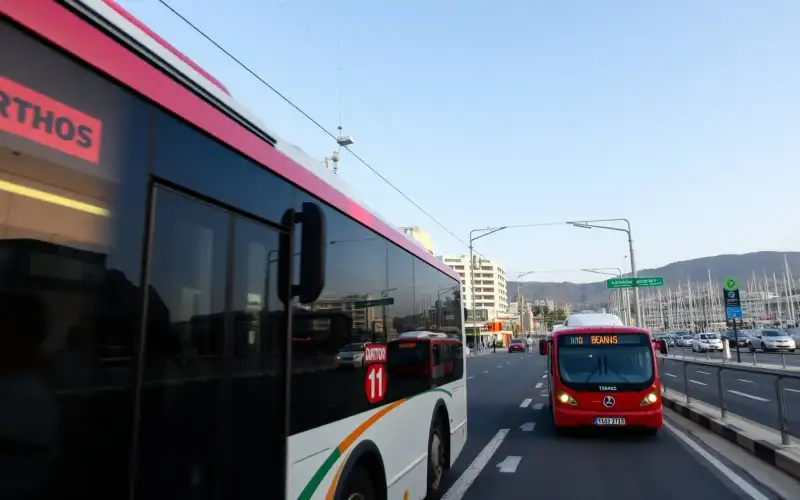
Last April, I watched a smartly dressed businessman from London miss his connection to the Akrotiri peninsula because he'd queued at the wrong ticket window for twelve minutes. He had the right bus number, the right stop, even the right time—but not the right information. Within the hour, I'd fielded questions from three other guests at my hotel about which buses actually run to the marina, whether you can pay with card, and why the Sunday schedule looks like someone's fever dream. Limassol's public transport system works beautifully once you crack the code. The trouble is, nobody hands you the key when you arrive.
The city's bus network carries roughly 15,000 passengers daily across 28 routes, according to the municipal transport authority. For visitors, that abundance of choice can feel paralyzing. This guide answers the questions I hear most from British travellers—the practical, specific ones that guidebooks gloss over.
How Much Do Tickets Cost and Where Do You Buy Them?
Limassol's bus operator, EMEL, prices tickets on a zone system. A single journey within the city centre costs €1.50; a ride to the outer suburbs like Germasogeia or Agios Athanasios runs €2.00. Day passes exist—€4.00 for unlimited travel until midnight—but most visitors buy individual tickets because they're not routing themselves across the entire network daily.
You can purchase tickets in three ways:
- At the kiosk inside the main bus station (Saripolou Street, near the old port). Open 6:30 a.m. to 8:00 p.m. weekdays, 7:00 a.m. to 6:00 p.m. weekends. The queue moves quickly, staff speak English, and they'll explain your route without irritation.
- From selected convenience stores and kiosks displaying the EMEL logo. These are scattered throughout the city—you'll spot them near major hotels and shopping areas. Prices are identical to the station.
- Aboard the bus itself, from the driver. This costs €0.50 more per journey (€2.00 for a city centre ticket) and should only be your backup plan. Drivers are patient but buses can be crowded during peak hours (7:30–9:00 a.m., 1:00–2:00 p.m., 5:00–7:00 p.m.), and fumbling for change holds up the queue.
Card payments? The system doesn't yet support contactless or chip readers on buses themselves. Bring cash in euros, or buy tickets in advance at the station. This remains one of Limassol's minor frustrations for digital-native travellers, but it's changing—EMEL has announced plans for a mobile ticketing app by late 2026, though I wouldn't bet my flight home on the timeline.
Which Routes Matter for Tourists and Business Travellers?
Not all 28 routes serve visitors equally. Here are the ones you'll actually use:
The Marina and Waterfront Cluster
Routes 30 and 31 connect the city centre to the marina precinct, the seafront promenade, and the old port area. Route 30 runs every 15 minutes during the day (6:00 a.m. to 10:00 p.m.), making it reliable for evening strolls or restaurant reservations. The journey takes 12 minutes from the main bus station. Route 31 serves the same corridor but with fewer stops and is useful if you're staying near the Four Seasons or the Amathus area and want direct access to the marina's restaurants and bars.
The Wine Route (Route 60)
This is the one I recommend most to wine enthusiasts. Route 60 departs from the main station at 9:00 a.m. and 2:00 p.m., heading into the Troodos foothills toward the villages of Omodos and Koilani, home to family-run wineries like Tsantali and Ktima Gerolemo. The journey takes 90 minutes each way. The bus returns at 1:00 p.m. and 6:00 p.m., giving you a solid four-hour window for tastings. This route operates year-round but is most popular May through October. Book your winery visit before boarding—drivers won't wait, and the return bus won't delay for stragglers.
The Airport Connection (Route 20)
Larnaca International Airport lies 70 kilometres east of Limassol. Route 20 departs the main bus station hourly between 5:30 a.m. and 9:30 p.m., taking approximately 90 minutes depending on traffic. The fare is €8.00. This route is cheaper than a taxi (which costs €60–€75) but slower and less convenient if you're carrying luggage. However, for return journeys when you're not time-pressured, it's sensible. The bus is air-conditioned, fairly modern, and stops at the airport's main terminal entrance.
The Akrotiri Peninsula (Routes 10, 11)
These routes serve the British Sovereign Base Area and the village of Akrotiri itself, including the archaeological site and Lady's Mile beach. Route 10 runs every 20 minutes during daylight hours. The fare is €2.00. If you're visiting the beach or the Akrotiri Archaeological Museum, this is your route. However, note that the bus terminates at the village centre; you'll need a short taxi ride (€3–€5) to reach Lady's Mile itself.
What Are the Actual Schedules and Frequencies?
This is where British travellers often stumble. Limassol's buses run to a timetable, not a frequency guarantee. During weekday peak hours (7:00 a.m. to 9:00 a.m., 1:00 p.m. to 3:00 p.m., 5:00 p.m. to 7:00 p.m.), main routes like 30, 31, and 10 operate every 10–15 minutes. Mid-morning and afternoon services thin out; expect 20–30 minute gaps. Evening buses (after 8:00 p.m.) become sparse, and after 10:00 p.m., only a handful of routes operate.
Sunday and public holiday schedules are drastically reduced. I've seen visitors arrive at a bus stop on a Sunday expecting the usual frequency and wait 45 minutes for a bus that normally comes every 15 minutes. The system doesn't shut down—it limps along at roughly 40% weekday capacity. If you're planning a Sunday excursion, check the EMEL website or ask your hotel concierge for the specific Sunday timetable the evening before.
Night buses don't exist in Limassol proper, though there are late-evening services until around 11:00 p.m. on main routes. After midnight, you're relying on taxis or ride-sharing apps like Beat or Uber, which operate throughout the city and charge €5–€12 for typical journeys.
| Route | Main Stops | Frequency (Weekday) | Journey Time | Fare |
|---|---|---|---|---|
| 30 | Bus Station → Marina → Old Port | Every 12–15 min | 12 min | €1.50 |
| 60 | Bus Station → Omodos → Koilani | 2 departures daily | 90 min | €3.50 |
| 20 | Bus Station → Larnaca Airport | Hourly | 90 min | €8.00 |
| 10 | Bus Station → Akrotiri Village | Every 18–20 min | 35 min | €2.00 |
How Do You Navigate the System Without Speaking Greek?
English signage at the main bus station is adequate but not comprehensive. The departure board lists routes and times in Greek and English. However, smaller stops throughout the city rely on Greek-only signs—you'll see the route number and destination in Greek script, which is useless if you don't read it.
My practical solution: screenshot the EMEL route map from their website before you travel, or ask your hotel to circle your destination on a printed map. When boarding, simply show the driver your destination name written on your phone or a piece of paper. Limassol drivers are accustomed to tourists; they'll nod and tell you when to get off, or alert you to your stop.
The EMEL website (emel.com.cy) lists all routes, timetables, and fares in English. It's not the most intuitive interface, but the information is accurate and updated regularly. Download the PDF timetables for routes you plan to use—connection speed on mobile can be slow, and you won't have data coverage everywhere.
One more tip: befriend the staff at your hotel. Concierges in Limassol are remarkably well-informed about bus routes because they field these questions daily. A five-minute conversation will save you 30 minutes of confusion at the bus station.
What Should You Actually Know Before You Board?
Limassol buses are modern, air-conditioned, and generally clean. Seats are reserved for elderly passengers, pregnant women, and people with disabilities—respect these designations. Luggage racks are available; large suitcases should be stored there, not blocking aisles.
Buses are crowded during peak hours. If you're travelling with valuables, keep bags zipped and close to your body. Pickpocketing is rare on Limassol buses, but it happens in any crowded transport system. Don't leave phones, wallets, or cameras unattended on seats.
Payment must happen before or as you board. Once you've paid, you don't need to validate your ticket—the driver simply takes it or notes your payment. If you buy a day pass, keep it on you; inspectors occasionally board and check tickets, though fines for fare evasion are steep (€50+).
Buses run on schedule, not on sympathy. If a bus is listed to depart at 2:15 p.m., it will leave at 2:15 p.m. whether you're aboard or not. Arrive five minutes early, especially for less frequent routes like the wine route.
"The bus system works beautifully once you crack the code. The trouble is, nobody hands you the key when you arrive."
Are There Alternatives When the Bus Doesn't Work?
Yes, and they're worth knowing. Taxis in Limassol are metered and relatively honest; expect €8–€15 for a journey across the city centre. Ride-sharing apps Beat and Uber operate here and are often cheaper than taxis, especially for longer distances. A journey to the marina from the city centre runs about €6–€8 via app, versus €12–€15 by taxi.
Car rental is viable if you're staying longer than three days and want to explore beyond the city. Agencies cluster near the main bus station and at the airport. Budget daily rates run €25–€40 for a compact car, plus fuel and parking. Driving in Limassol itself is chaotic and parking is scarce; I only recommend it for countryside exploration.
Bicycles are increasingly available through sharing schemes, though they're most useful for waterfront journeys rather than crossing the city. Walking remains the best way to explore central Limassol—the old town is compact, and most tourist attractions are within 20 minutes on foot from the marina.
Final Practical Notes for 2026
The public transport system in Limassol is reliable, affordable, and improving. EMEL's planned mobile app should launch by autumn 2026, making ticket purchases seamless. Until then, buy tickets at the station or kiosks, keep small euros for backup purchases, and don't assume Sunday schedules match weekday frequencies.
The wine route remains underutilised by visitors—most tourists default to organised tours, which cost €60–€80 per person. The bus costs €3.50 and deposits you in the heart of wine country. Yes, you'll need to arrange your own winery bookings, but the independence and savings are worth the minor planning effort.
Limassol's bus network isn't glamorous, but it connects you to the real city—the one where locals work, shop, and spend their weekends. That's where the best restaurants hide, where the wine tastes honest, and where you'll understand why people choose to live here rather than simply visit.


Comments (4 comments)